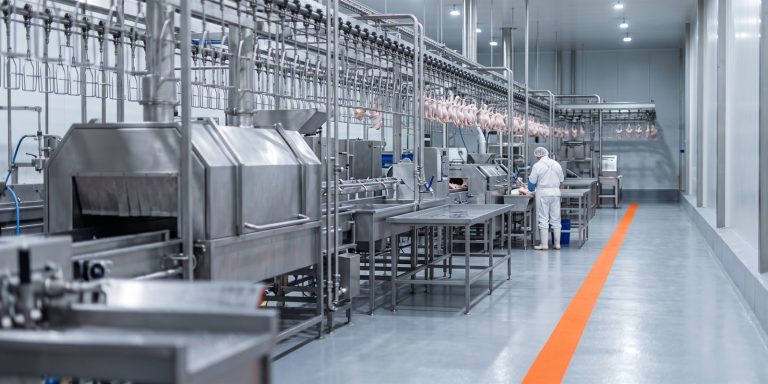
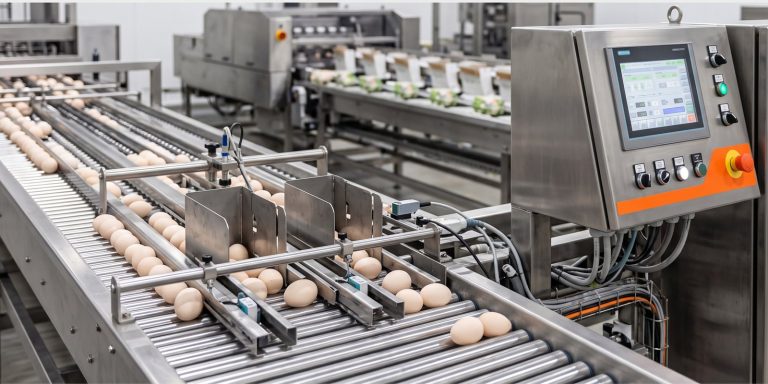
Blood, Gut And Fat In. Permit-Ready Water Out.
Slaughterhouse effluent is one of the hardest industrial waters to treat: blood and paunch solids, hair and feathers, fat and gut contents, and wash-down water loaded with protein and grease. It only clears up when the stages are engineered as one train — screen it, float it, digest it, settle it, press the sludge. This page gathers the 10 equipment lines NPW builds for that job, printed in the order your water meets them, with the figures taken from each machine’s own datasheet.
- 01ScreeningNPW-MBS · NPW-RDMHair, gut, paunch
- 02FlotationDAF · SDAF · CAF · ECFFat, blood, fine SS
- 03AnaerobicIC · UASB towersHigh COD → biogas
- 04AerobicAO / A2O · MBRBOD & NH3-N
- 05ClarificationNPW-LTC lamellaPolished settling
- 06SludgeNPW-BFP belt press20–35% dry cake
Five Stages, Sized Against The Same Water
Bought one machine at a time, a treatment line argues with itself: a DAF that chokes on hair the screen never caught, a press returning wet cake because no one tested the polymer, a biological plant overloaded every time the launders open. The four chapters below are engineered as one set — and every number on this page comes from our own product datasheets, not from a brochure.
Drum screens 50–500 m³/h, DAF 8–300, shallow plants to 650, bio trains 10–500 m³/day — sized as one stream, not one catalogue line at a time.
Rake teeth, screen cloth, launders and press discs in SUS 304; tanks epoxy-lined or hot-dip galvanized; scraper flights in polyurethane rubber.
Gravity, wedge and multi-roll shear hit 20–35% dry solids, and the lamella in front cuts the settling footprint by 60–70%.
Six Failures We Build Against
Each failure below costs a plant more per year than the machine that prevents it. Under every failure sits the NPW line that closes it.
Hair and gut solids destroy everything downstream
The first ten minutes decide the rest of the line: hair, paunch content and gut solids jam pumps, wrap aerators and blind membranes. A rotary rake bar screen with 1–20 mm openings takes the coarse load in a 500–1,500 mm channel, and a 40–200 mesh drum screen behind it removes at least 95% of everything above 0.75 mm before the chemistry starts.
Grease and blood do not settle — they float
Rendered fat and blood colloids ride on the surface of a settling tank and leave with the effluent. Dissolved air flotation forces them up on purpose: 20–80 µm micro-bubbles generated at 0.35–0.50 MPa lift 90–95% of suspended solids and the bulk of the grease into a skimmer that walks it off the tank.
A blood dump can suffocate an aerobic plant
High-strength slaughter wastewater overwhelms an aerobic stage before the biomass adapts. An IC internal-circulation tower carries 15–25 kg COD/m³/d — the IC-5000 removes up to 10,990 kg of COD a day — and turns the load into methane instead of into a violation.
Treatment tanks eat the yard you need for trucks
Circular sedimentation tanks are the biggest footprint on most plants. A 60° lamella pack settles three to five times faster and cuts land occupation 60–70% against a circular tank; a buried integrated plant puts the whole biological train underground and leaves the surface as parking.
Hauling wet sludge is paying to move water
Sludge at 96–98% moisture is mostly a water bill on truck wheels. A belt filter press with dynamic flocculation conditioning takes the cake to 20–35% dry solids at 5–8 m³/h per meter of belt width, turning disposal cost into a stackable, haulable solid.
Discharge limits tighten faster than lagoons fill
Reuse, irrigation and permit classes all demand more than primary treatment. The integrated AO/A2O + MBR train is rated at COD removal of 85–90%, BOD₅ above 90% and NH3-N above 80–90%, to the national Class 1A integrated standard — stated before you commit, from your own water analysis.
Screening & Preliminary Treatment
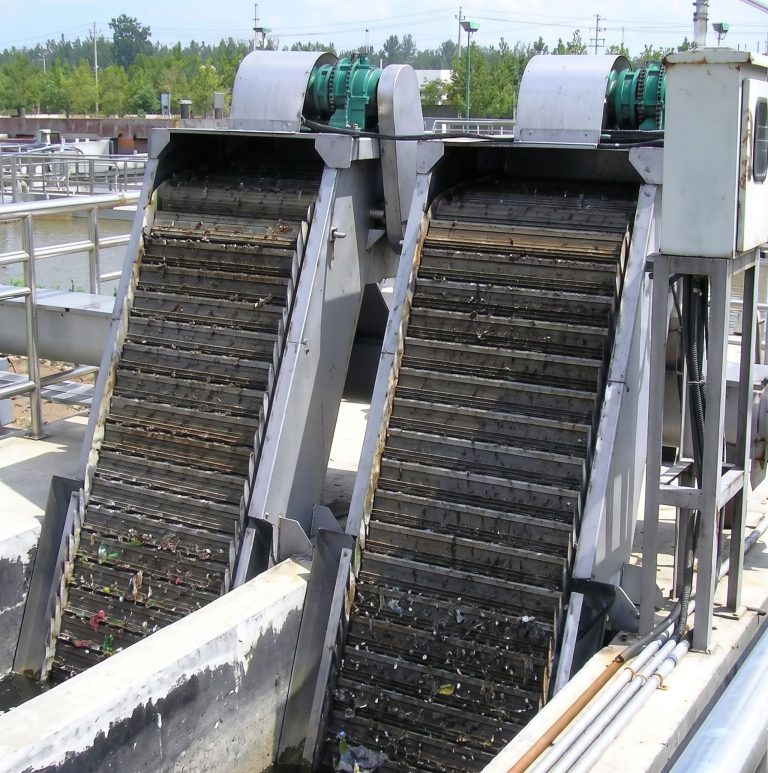
Everything that saves money downstream is decided here: the coarse load that would jam a flotation skimmer, and the fine fibers that would blind a membrane. The MBS rotary rake screen handles hair, paunch and gut solids in channels from 500 to 1,500 mm wide and 1.0 to 5.0 m deep, discharging 800–1,200 mm above the floor straight into dumpsters or screw presses. The ZLWL rotary drum closes the fine end: five models from 50 to 500 m³/h on 40–200 mesh stainless cloth, with internal spiral discharge and external high-pressure spray keeping the pores open around the clock.
Coarse Rake & Fine Drum
Two screens, one clean stream for every stage behind them
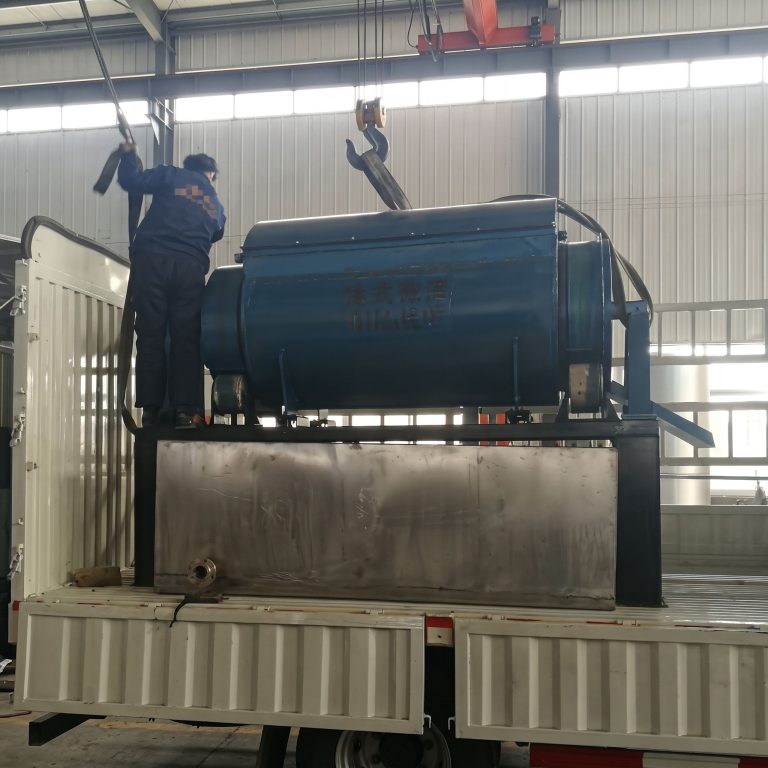
Flotation & Physicochemical Separation
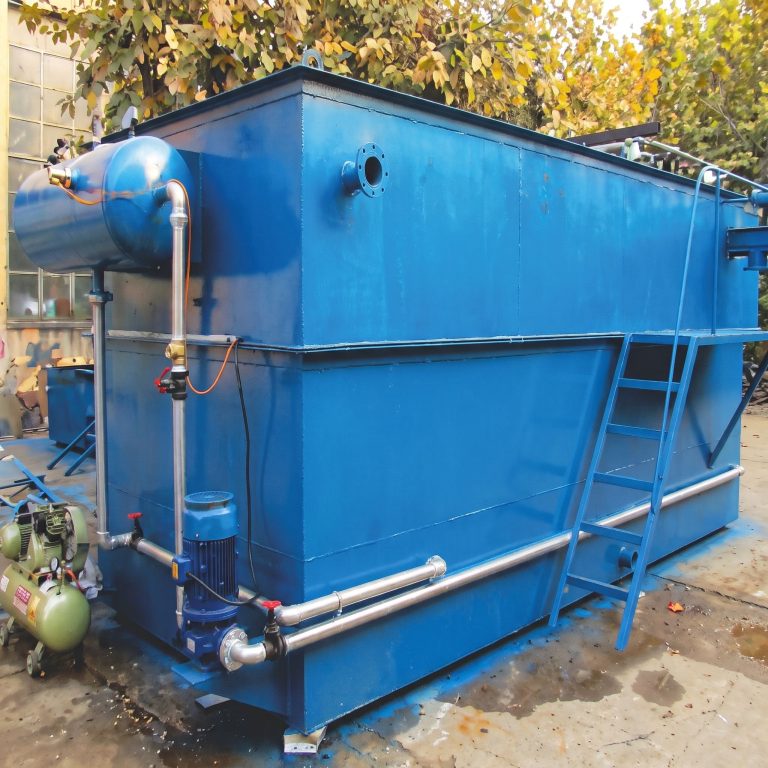
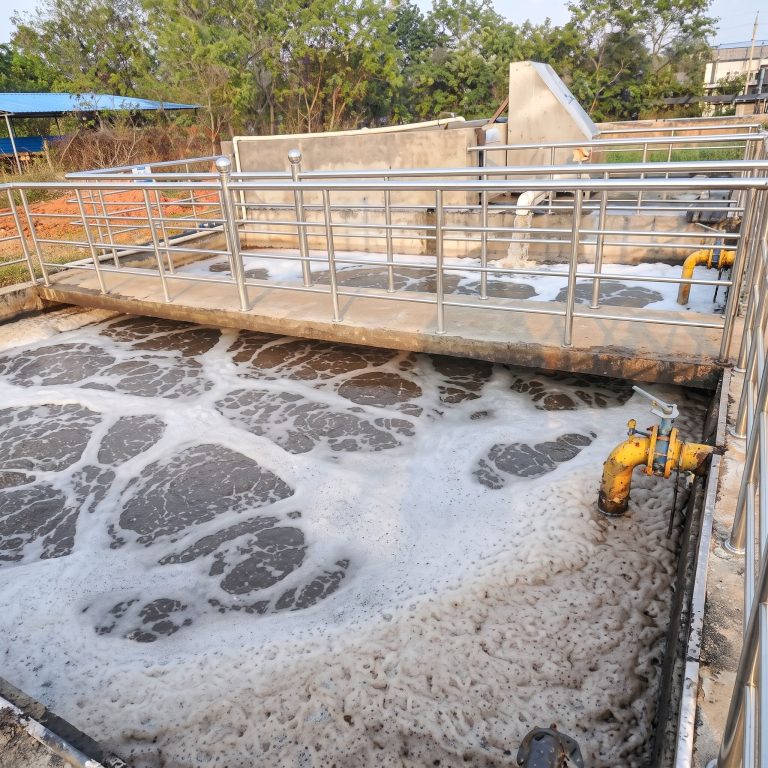
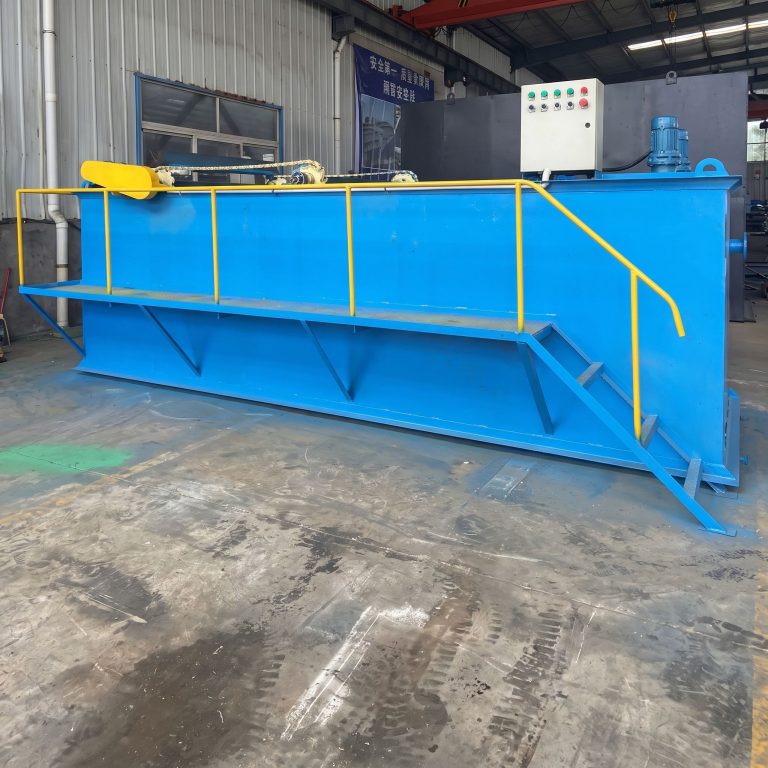
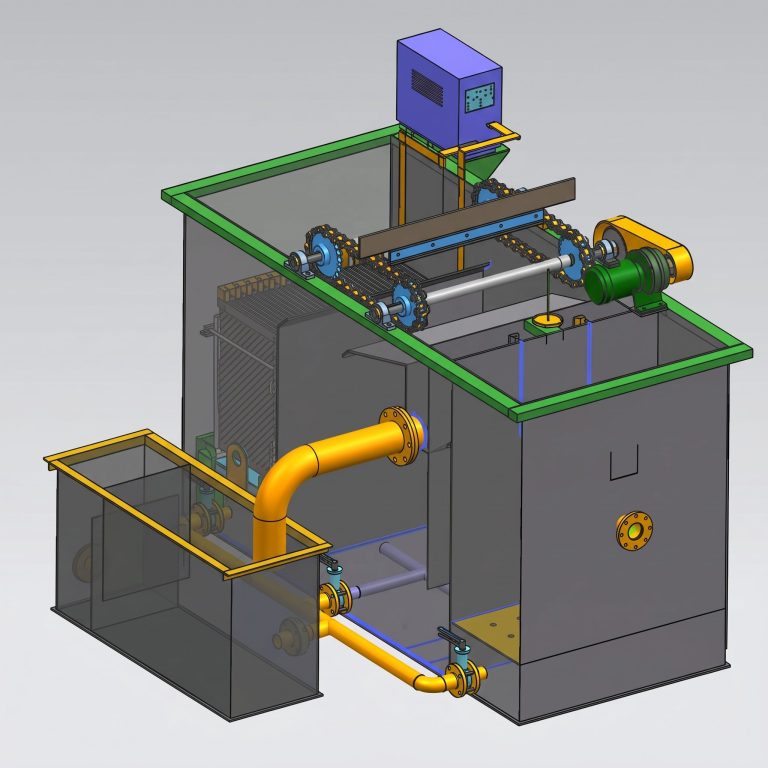
Fat, blood colloids and fine suspended solids are the signature load of slaughterhouse water, and flotation is the stage that takes them out — four ways, sized by flow and by how much capital you want in the utility room. The table under the cards compares the routes on the numbers that decide the choice.
Four Separation Routes
Pressurized bubbles, cavitation bubbles or electrode bubbles
The Four Routes Compared
Figures from the datasheet of each series — flow range and utilities are the first numbers to match
| Route | How The Bubbles Are Made | Flow Range | Utilities & Footprint | Best For |
|---|---|---|---|---|
| DAF NPW-DAF | Pressurized saturation at 0.35–0.50 MPa, 20–80 µm bubbles | 8–300 m³/h | Air receiver + recirculation pump; horizontal tank or vertical super-DAF | The standard fat & SS workhorse: blood water, primary polishing, 90–95% SS removal |
| Shallow DAF NPW-SDAF | Same pressure saturation, in a 1 m-deep zero-velocity circular pool | 40–650 m³/h | 2.25–5.2 kW rotating bridge, 7.5–37 kW recirculation; Φ4.3–14 m pools | Central slaughtering complexes and meat-park volumes — 3–5 min retention |
| CAF NPW-CAF | Vortex impellers draw air at atmospheric pressure — no vessel, no compressor | 10–500 m³/h | 3.3–15.4 kW installed; prefabricated steel tank (RC guide above 320 m³/h) | Low-investment plants and equalization polishing where zero clogging matters |
| Electrocoagulation NPW-ECF | Micro-bubbles generated by sacrificial Fe / Al / Ti / graphite electrodes | 1–50 m³/h | 2–20 m² footprint, 0.8–7.3 t; electricity replaces chemical dosing | Refractory water: emulsified oils, plating-type rinses, color, heavy metals, final polishing |
Biological Treatment
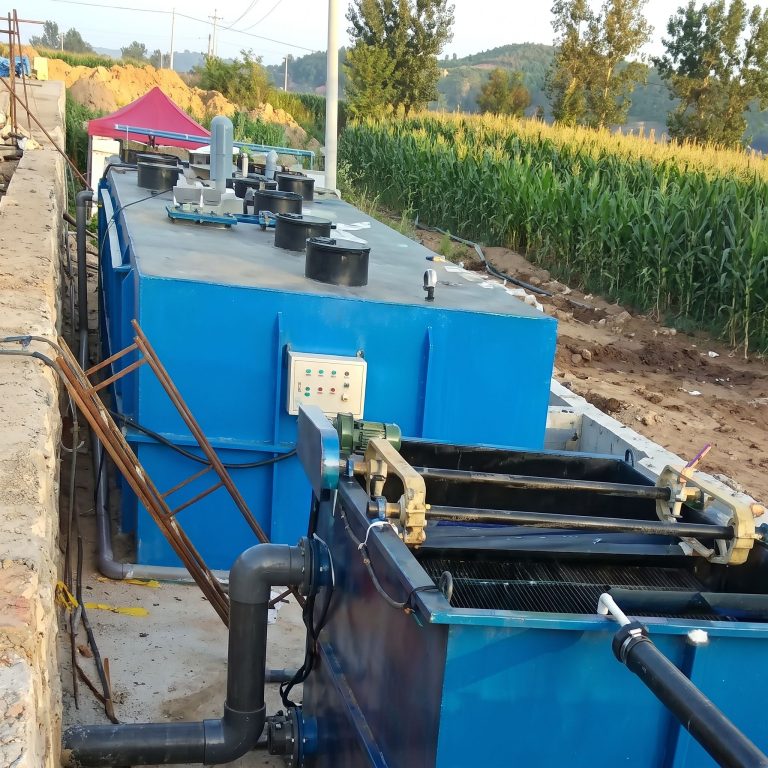
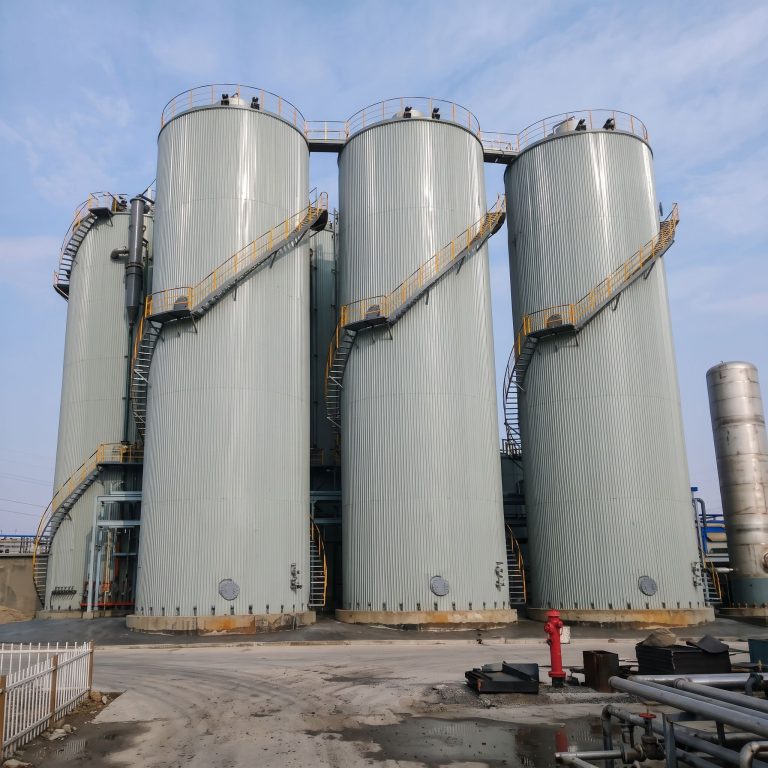
Dissolved organics are the part screening and flotation cannot touch — and in a slaughterhouse they arrive as shocks, not steady flow. The IC / UASB anaerobic towers digest the high-COD stream at 15–25 kg COD/m³/d on the IC side and give the fuel back as biogas; the NPW-IWT integrated plant runs the aerobic half — grid, AO/A2O contact oxidation, secondary clarifier, MBR and disinfection — as one pre-engineered train from 10 to 500 m³/day, buried under the yard or shipping as a container.
Anaerobic Load Cutting & Complete Plants
From a single tower to a buried treatment works
Clarification & Sludge Dewatering
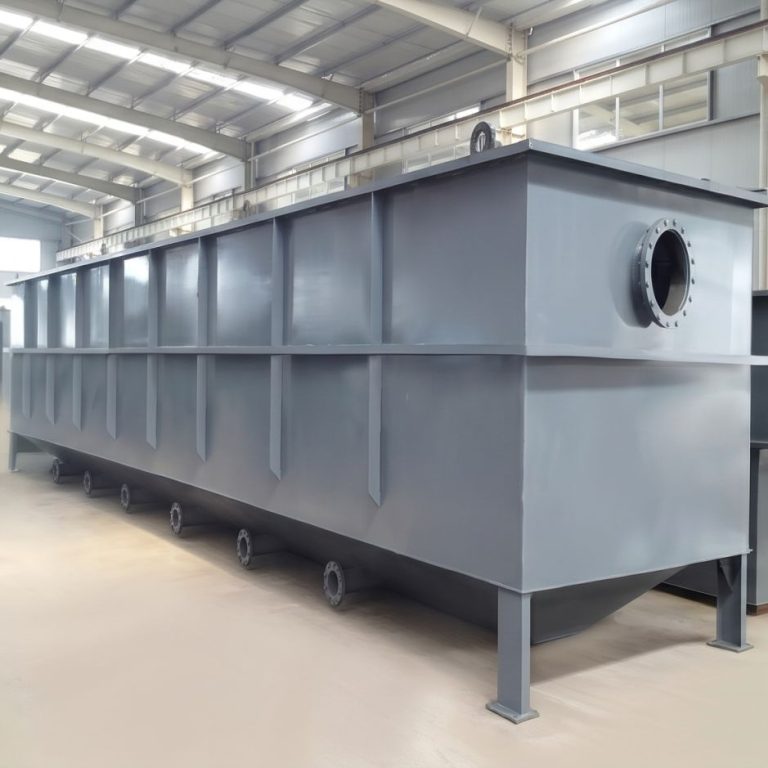
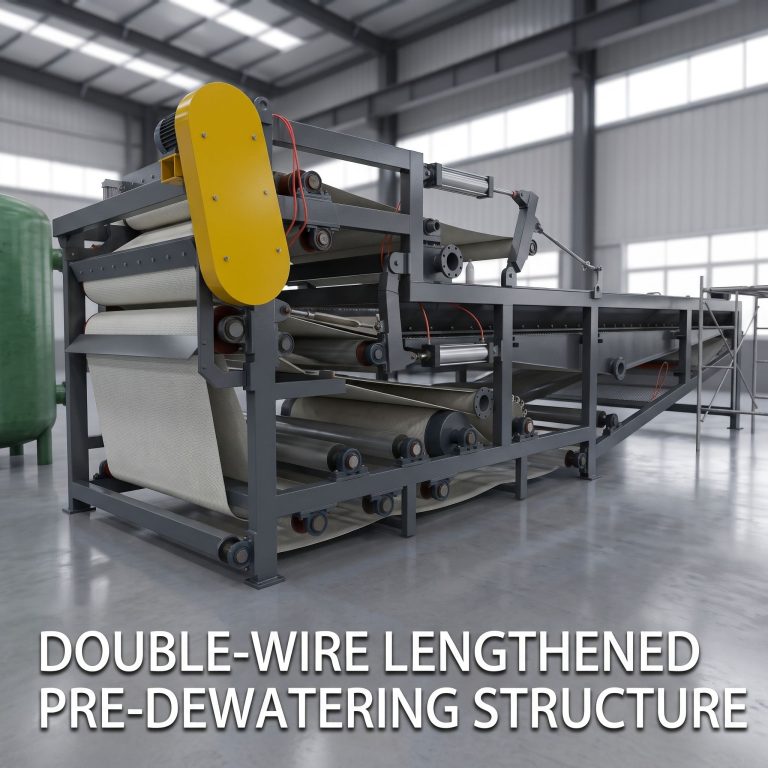
The last two decisions are what leaves the site: how clear the water is, and how wet the solids are. The lamella clarifier settles the polished stream at 1.5–3.0 m³/m²/h on 60° polypropylene tube media inside a footprint 60–70% smaller than a circular tank. The belt press takes the conditioned sludge through gravity, wedge and multi-roll shear to a 20–35% dry-solids cake. Both depend on the chemistry next door — matching coagulant and flocculant is part of the sizing, not an afterthought.
Settling & Pressing
The final water spec and the final cake spec
Conditioning Chemistry
The dosing line behind the flotation and pressing numbers on this page
What Survives Slaughterhouse Water
Stainless where the water touches
Bar-screen rake teeth and every underwater component in SUS 304; drum screens on 304/316 wire cloth; perforated V-notch stainless overflow launders; press rollers and frames in epoxy, hot-dip galvanized or full 304 to match the budget.
Tanks built for the pit, not the showroom
Heavy epoxy-lined carbon steel with corrosion primer as standard on DAF and lamella shells, hot-dip galvanized structural steel on press chassis, prefabricated steel flotation tanks up to 320 m³/h with a reinforced-concrete guide beyond that.
Bubbles are the working part
DAF micro-bubbles of 20–80 µm generated at 0.35–0.50 MPa saturation; cavitation impellers that pull air at atmospheric pressure with no vessel to foul; electrode stacks that make their own coagulant and bubbles in one pass.
Drives that stop before they break
Cycloidal pinwheel reducers with mechanical torque-limiter protection on the rake; electro-pneumatic belt tracking with safety-wire halts on the press; timer and level-differential automatic control on screening, and full PLC cabinets on the integrated plants.
Chemistry matched to the machine
Dynamic polymer flocculation reactors with visual sight chambers on the press line; PAC, PAM and caustic soda from the same supply, jar-tested against your water before a single bag ships.
One container, one supplier
Screens, flotation tanks, reactors, presses and dosing chemistry ship on the same booking, with the process list, the civil drawings and the wear-part schedule written for the whole train rather than per machine.
From Water Sample To Running Plant
Effluent survey
Daily flow, operating hours, influent COD / BOD / SS / fat and the discharge standard you must meet.
Process route
Screen sizes, flotation choice from the four routes, biological loading, sludge plan — one train, priced as a set.
Drawings & quotation
Layout, civil interfaces and a factory-direct quotation returned within 24 business hours.
Fabrication & QC
Tank welds, coating thickness, stainless certificates and motor run-in checked against the datasheet.
Container loading
Skids, screens and chemistry loaded together; every pallet photographed before the doors close.
Commissioning
Start-up sequence, biomass seeding guidance, polymer dose setting and an operator checklist.
Four Buyers, Four Different Streams
Pig, cattle and sheep operations where blood, paunch and fat loading decide the process — and the permit office decides the deadline.
Feather, gut and wash-down streams on flume water: fine drum screening and high-flow flotation sized for scalding-house volumes.
Shared treatment capacity for processing parks, cold chains and cleaning-in-place discharge, with reuse and irrigation targets.
Equipment packages with datasheets, drawings and loading lists a main contractor can put its own name on.
What Ships With The Order
What We Need From You
Send these and a named NPW engineer returns the process route, the equipment list and a factory-direct quotation within 24 business hours. A two-line lab report beats a paragraph.
- Flow: average and peak m³/hour, and operating hours per day
- Analysis: influent COD, BOD₅, SS, fat & grease, protein nitrogen
- Source: species processed, blood share, paunch content, wash-down or flume water
- Target: discharge permit class, reuse or irrigation — send the limits
- Site: available area, channel width and depth, civil constraints for tanks
- Power: 380 V three-phase availability and any generator backup
- Sludge: target cake dryness and the disposal or fertilizer route
- Delivery: destination port, and whether commissioning support is needed
FAQ
Start from flow. Up to 300 m³/h the industrial DAF covers it in horizontal (8–100) or vertical super-DAF (120–300) frames with 90–95% suspended-solids removal. Above that, the shallow circular DAF runs 40–650 m³/h in a 1 m-deep pool with a 3–5 minute retention time. If you want no pressure vessel and no compressor at all, the CAF covers 10–500 m³/h on 3.3–15.4 kW of vortex aerators. Refractory streams — emulsified oil, color, heavy metals — go to the electrocoagulation unit at 1–50 m³/h instead of, or behind, the flotation.
How the bubbles get into the water. A DAF dissolves air into a pressurized recycle stream at 0.35–0.50 MPa and releases it as 20–80 µm bubbles — finer, more uniform, and the right choice when removal efficiency decides the permit. A CAF spins a cavitation vortex impeller that pulls atmospheric air directly into the tank — no air compressor, no pressure vessel, no circulation pump, so the utility room and the capital both shrink, at the cost of slightly coarser separation. Many slaughter plants screen with the CAF on equalization duty and keep the DAF for the main fat and blood load.
Both, if you process whole animals. The bar screen is the bodyguard: 6–20 mm clear openings for the coarse load — gut contents, paunch, hair, feathers — in a channel 500–1,500 mm wide and up to 5 m deep, discharging straight into a dumpster or screw press. The drum micro-screen is the finisher: 40–200 mesh cloth (0.2–1.0 mm) catching what floats past the rake, at 50–500 m³/h with at least 95% removal above 0.75 mm and 55% above 0.37 mm, washed by internal spray headers so it never blinds. Feeding a DAF without the drum behind the bar screen means floating fibers, not fat.
It depends how much COD arrives before you get there. Blood water and paunch liquor are strong: an IC tower digests 15–25 kg COD per cubic meter per day, and a single IC-5000 removes 9,420–10,990 kg of COD a day while generating usable biogas. UASB units cover 100–500 m³ at 5–10 kg COD/m³/d for steadier loads. If your water is dilute wash-down, the aerobic half of an integrated plant handles it directly. Send the analysis and we state which towers, if any, earn their freight.
At small and medium flows — 10 to 500 m³/day — when you want the treatment gone from the surface. The NPW-IWT ships as a modular train with grid screening, AO/A2O contact oxidation, secondary clarification, MBR filtration and disinfection already piped, in FRP, epoxy carbon steel or SUS 304, controlled by a PLC cabinet with micro-porous aeration. Buried, the ground above carries parking or landscaping; containerized, it moves with the plant. Effluent is rated to the national Class 1A integrated standard: COD removal 85–90%, BOD₅ above 90%, NH3-N 80–90%.
20–35% dry solids depending on the sludge biology — municipal-type sludge comes in at 96–98% water and leaves at 75–80%. The three stages do it in order: gravity drainage, low-pressure wedge squeeze, then high-pressure multi-roll shear across belts from 1,000 to 3,000 mm wide, running 5–8 m³/h per meter of belt. A dynamic flocculation reactor with a sight chamber conditions the sludge before it touches the first belt; without the matched PAM dose, no press makes a dry cake.
Land and residence time. The 60° hexagonal polypropylene tube media (Phi 50 / Phi 80 mm) give the same settling a circular tank does in a fraction of the plan area — civil land occupation drops 60–70% — and the hydraulic surface load of 1.5–3.0 m³/m²/h is up to three times a conventional clarifier. Coagulated water flashes through the built-in mix chamber, solids settle into multi-hopper bottoms with pneumatic quick-dump valves, and perforated V-notch stainless launders take the overflow evenly.
Three, and we jar-test all of them against your water before quoting: PAC poly aluminum chloride to coagulate the fat colloids and turbidity ahead of flotation and settling, PAM to bind the floc so the DAF skimmer and the belt press have something to grab, and caustic soda to hold the pH the biological stages need. If you would rather dose nothing at all, the electrocoagulation unit replaces the coagulant with a dissolving iron or aluminum electrode — electricity instead of bags.
That is the only way we quote treatment. From the flow and analysis we return the process route, the model at each stage, the civil interface drawings and the dosing plan — screens sized to the channel, flotation sized to the fat load, reactors sized to the COD, the press sized to the sludge the line actually makes. For slaughterhouse projects that continue through the kill floor, the same engineering desk works with the line teams; see the Pig Slaughter Line Solution and the Water Purification Solution for how the two ends connect.
Get Your Effluent Line Sized
Send the daily flow, a water analysis and the discharge standard you must meet — a named NPW engineer returns the process route, the equipment list and a factory-direct quotation within 24 business hours.
Tell Us About The Water
- Flow: average and peak m³/h, hours per day
- Analysis: COD, BOD₅, SS, fat & grease, nitrogen
- Source: species, blood and paunch share, wash-down profile
- Target: permit class, reuse or irrigation limits
- Site: available area, channel depth, civil constraints
- Sludge: target cake dryness and disposal route
- Power: 380 V three-phase and generator backup
- Delivery: destination port and commissioning support
Talk To Your Engineer
Every NPW solution is handled end to end by one named engineer — capacity sizing, layout drawings, configuration lists and shipping schedules. Reach out directly and you will speak to the person responsible for your line, not a call centre.