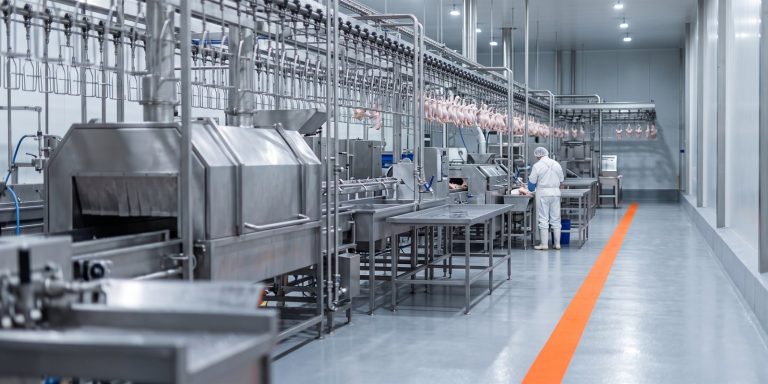
NPW Pig Slaughter Systems · Qingdao, China
Pig Slaughter LinesFrom Lairage To Chilled Carcass
From 50 pigs a day on a single-track plant to 500 pigs a day on an automated line. NPW engineers and builds the whole sequence — gating and stunning, sticking and bleeding, scalding, dehairing, singeing, breast cutting, evisceration, synchronous offal inspection, carcass washing, splitting, sectioning, head and trotter finishing, casing and offal processing — then ships it with the layout, utilities and wear parts already planned.
From Lairage To Chilled Carcass
A pig line lives or dies on three numbers: scald temperature, dehairing rate and the time between sticking and evisceration. Run the scalder two degrees hot and the skin is damaged before the first beater touches it; under-size the dehairer and every carcass goes back through; drag the evisceration line out and the meat is warm, wet and already carrying bacteria when the inspector reaches it. We size each station against your target head rate and carcass weight, then hand you one specification sheet with the utilities already calculated.
Eight Failure Points On Pig Lines
Most of these are decided at specification stage, not on the plant floor — which is exactly where an NPW engineer starts.
⚠ What Goes Wrong On An Under-Specified Line:
- A scalder that drifts 2–3 °C either burns the skin or leaves the bristle roots tight, so the scalding and dehairing machine never reaches its rated output
- No pre-scald wash means mud and dung enter the scald water, the bath loads up in an hour and the carcass surface is contaminated before dehairing starts
- Under-sized dehairers leave 5–10% bristle carryover, and every rejected carcass returns to the singeing torch — gas cost up, line speed down
- Evisceration on a static rail with no synchronous inspection conveyor puts red offal, white offal and the carcass on the same table, which is the first thing a veterinary inspector flags
- Splitting by hand saw loses 1–2% of saleable meat in bone dust and off-centre cuts, and the sawdust is a hygiene problem in itself
- Head and trotter finishing left to open-flame torching gives uneven colour, scorched skin and a labour bill that grows with every shift
- Blood collected after a long drag from the sticking point coagulates and cannot be sold as food-grade plasma — a by-product stream lost before it starts
- A line bought from six suppliers means six lead times, six spare-part catalogues and nobody accountable when the dehairer becomes the bottleneck
Single-Track Line Or Standard Plant Line
The dividing line is around 200 pigs a day. Below it, one combined scald-and-dehair unit and a simple rail win on cost and commissioning speed. Above it, separate stations, mechanical assistance and synchronous inspection win on yield and labour. Same 14 stages either way.
Single-Track Pig Line
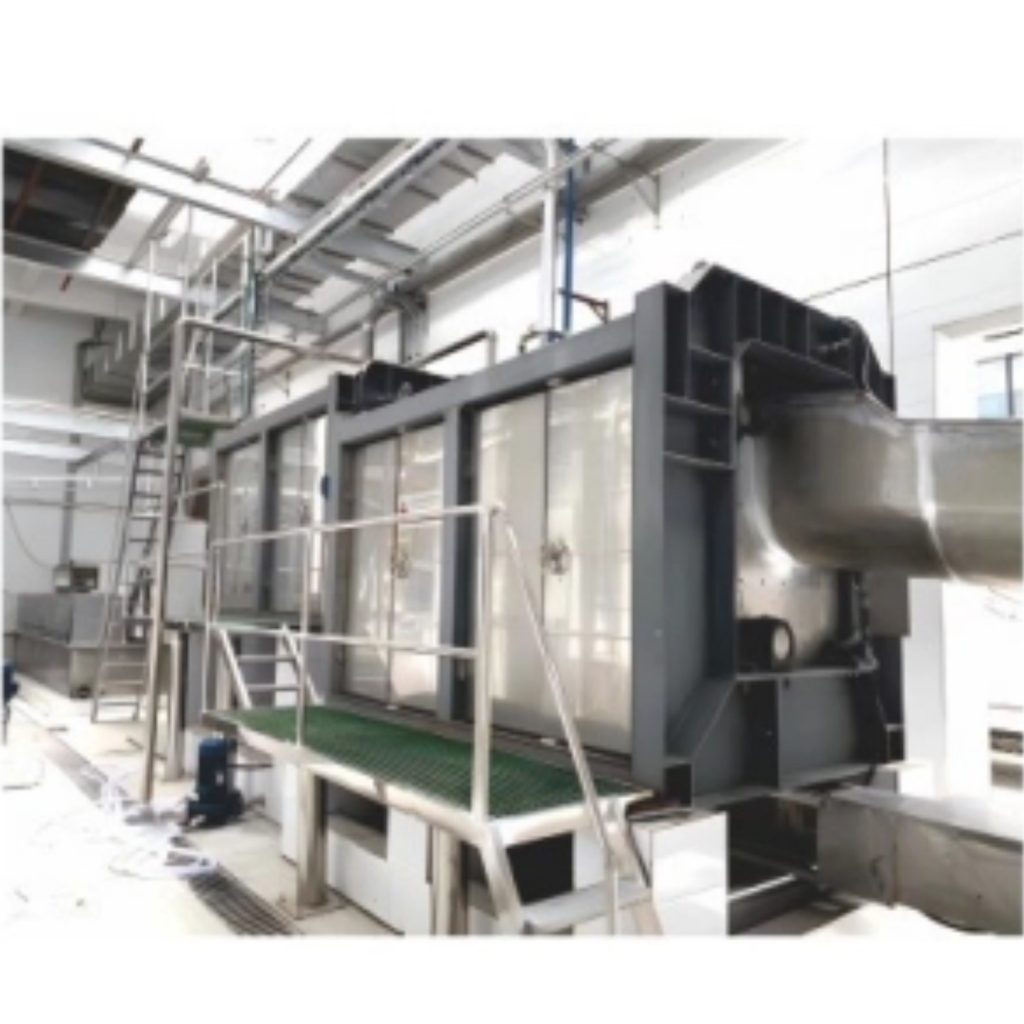
One overhead or floor track carries the carcass through every station, with a combined spiral scalding and dehairing machine as the core of the line. Sticking, breast cutting, evisceration and splitting stay manual but sit on the same rail, so the whole plant is built around two or three machines instead of twenty. Delivered in a few containers, commissioned in weeks, and run from a small boiler.
- Gating, hoist and bleeding rail with dual-pulley hooks
- Pre-scald carcass wash to keep the scald bath clean
- Combined spiral scalding and dehairing machine — the core of the line
- Head and hoof singeing, manual breast cut and evisceration
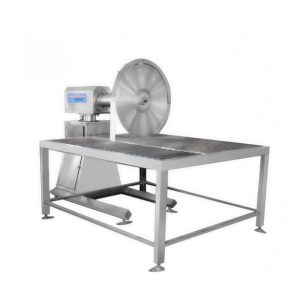
- Table disc saw for sectioning, hand finishing on the same rail
- Trotter and casing tables fed from the by-product side
Standard Plant Line
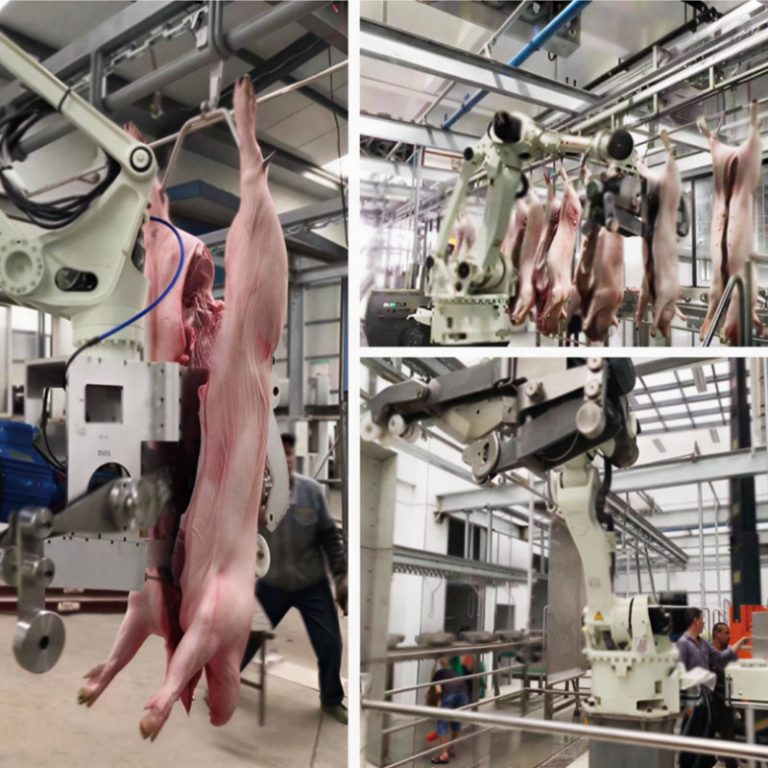
A modular plant line built station by station: continuous bleeding conveyor, two-stage spiral scald and dehair with its own hair conveyor, breast-removal hanging conveyor, viscera synchronous inspection with auto-cleaning trays, high-pressure carcass wash, robotic spine splitting, multi-layer division conveyor for sectioning, then dedicated head and trotter rooms and a casing line for the offal side.
- Enclosed track throughout with corner, lift and split sections
- Automatic bleeding line sized to the sticking team and shift pattern
- Two-stage spiral scald and dehair at a 98% dehairing rate
- Breast removal, evisceration and synchronous red/white offal inspection
- Robotic carcass splitting with automatic wash and manual override
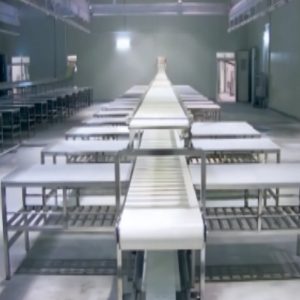
- Multi-layer crawler division conveyor feeding the cut-up and deboning tables
- Separate head room, trotter room and casing line as by-product cells
The 14-Stage Pig Slaughter Sequence
Every stage is a station we size, supply and install. Click any stage to jump straight to the machines we build for it.
Stage numbers match the equipment sections below and the plant layout blueprint. Line rate is set by the slowest station — send us your daily head count and average carcass weight and we will balance every stage against it.
Reference Plant Layout & Zoning
An indicative single-line arrangement for a 200 head/day pig plant. Yours is drawn to your land, carcass weight, shift pattern and local hygiene rules — and it is free with an enquiry.
Pig Plant — Zoning Diagram
≈ 450 m² processing hall · 200 head/day · one-way product flow · NW ↑
Pigs, staff, water and waste never cross. The scald and dehair hall runs under negative pressure against the dressing hall so air always moves dirty to clean, and the by-product rooms have their own dispatch door.
Scald water is filtered and recirculated, singeing gas is metered per head, and wash water drains to a fat trap before the effluent plant — the three biggest running costs on a pig line.
Boiler output for the scald curve, chiller duty for the chill room and effluent capacity are calculated from the head rate — before the building is drawn, not after.
Send your land dimensions, carcass weight and daily head count — we return a marked-up layout with the full utility list.
Free Layout Design →Pick A Daily Volume, We Balance The Stations
Tap the number of pigs you slaughter per day and tell us the carcass weight. We return the station set, container count, utility list and a factory-direct quotation.
20 Machines, Grouped The Way The Line Runs
Organised by process stage rather than by catalogue, so you can specify a line station by station. Every card opens the live product page with full specifications.
Stunning & Restraint
The station that decides whether the bleed is clean, the carcass is intact and the operator stays safe
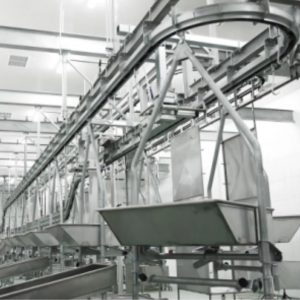
Bleeding & Dressing Conveyance
Conveyance that carries the carcass from sticking through breast cutting to the inspection table
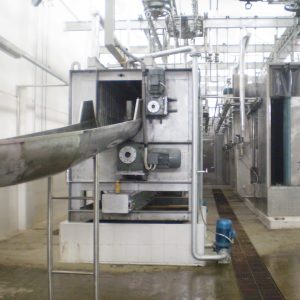
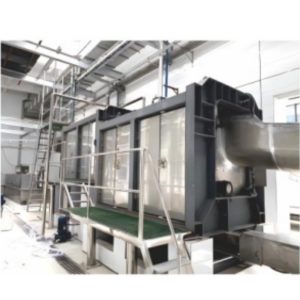
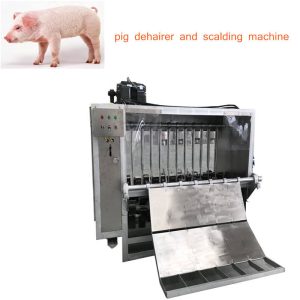
Scalding, Dehairing & Carcass Washing
The three machines that decide bristle carryover, skin damage and how clean the scald bath stays
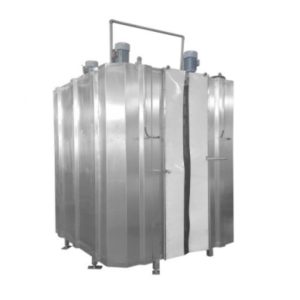
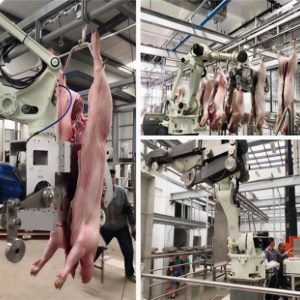
Splitting & Sectioning
Spine splitting and primals, from the robotic splitter to the division conveyor feeding the cut-up hall
Head Processing & Singeing
Head splitting, dehairing and gas singeing of head and hoof, with safety shields
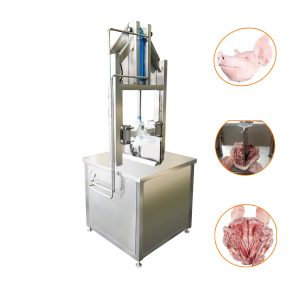

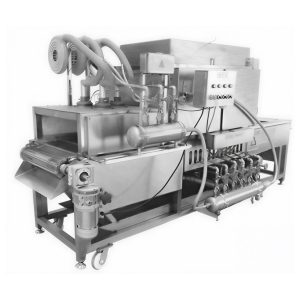
Trotter Processing
A complete trotter cell: splitting, hair removal, shell removal, washing and singeing

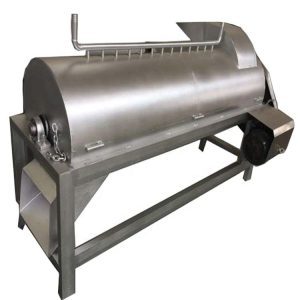
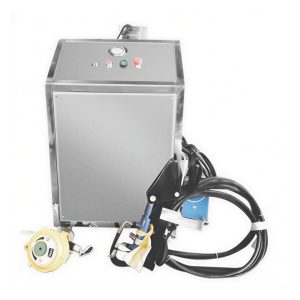

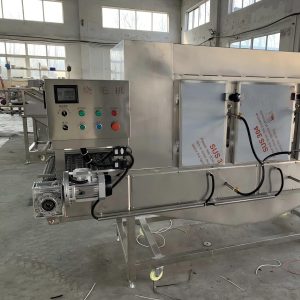
Offal & Casing Recovery
The by-product line that turns intestines into saleable hog casings
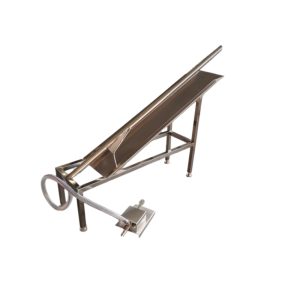
NPW Pig Lines In Operation
Six stations from a delivered pig line — bleeding, scald and dehair, inspection, splitting, head room and trotter room — as they arrive on site and run in production.
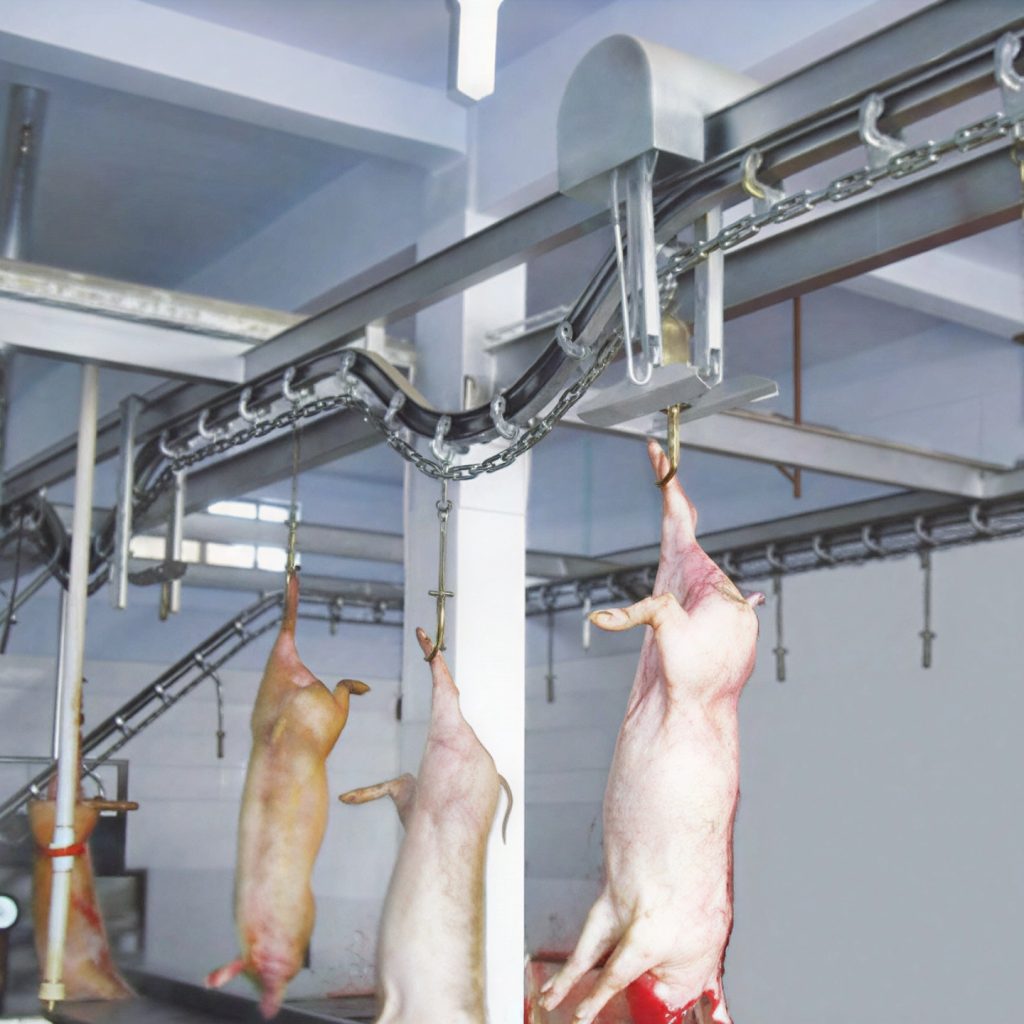
Bleeding On The Rail
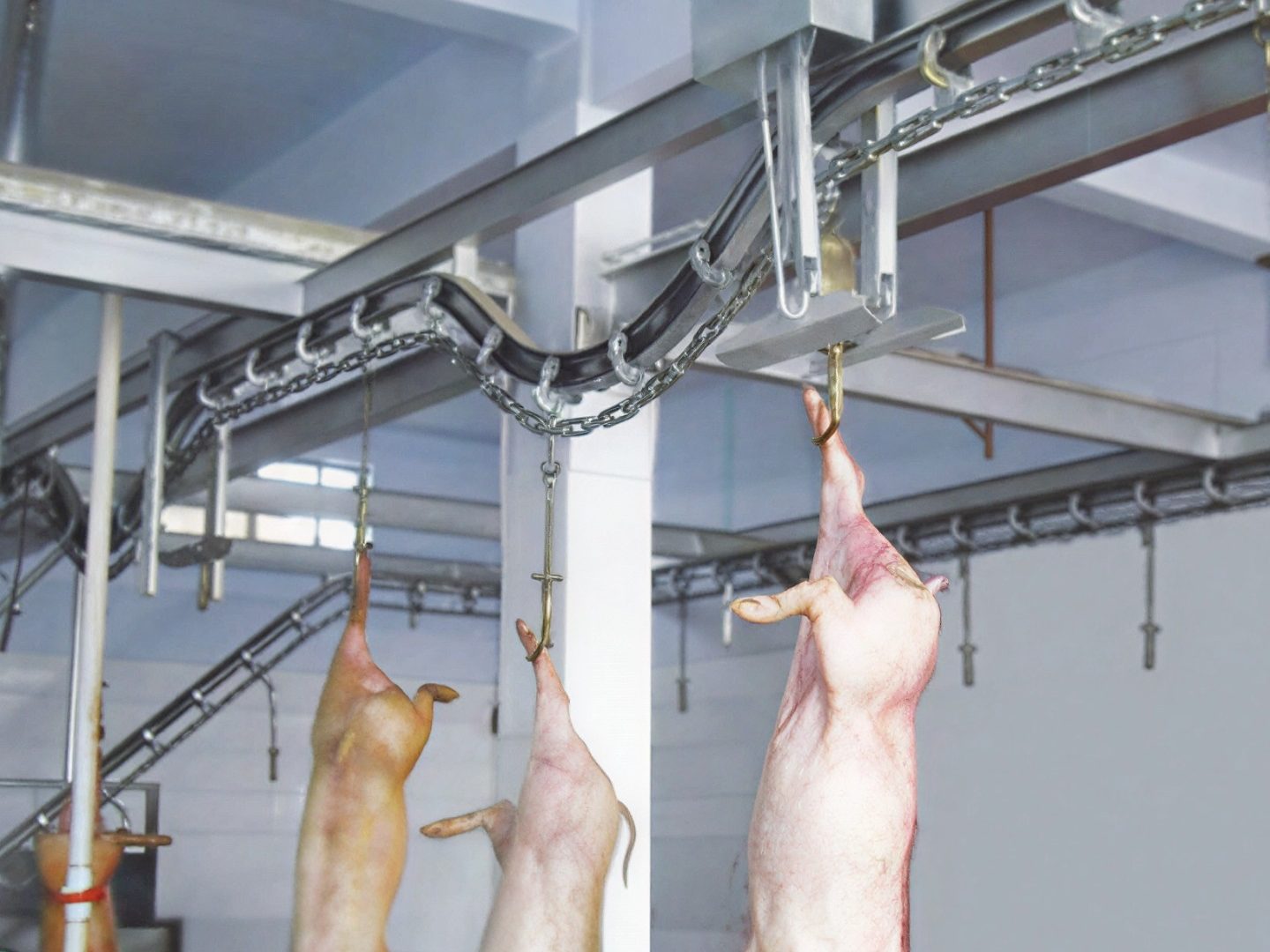
Stuck carcasses carried on dual-pulley hooks along the automatic bleeding line, over the collection trough.
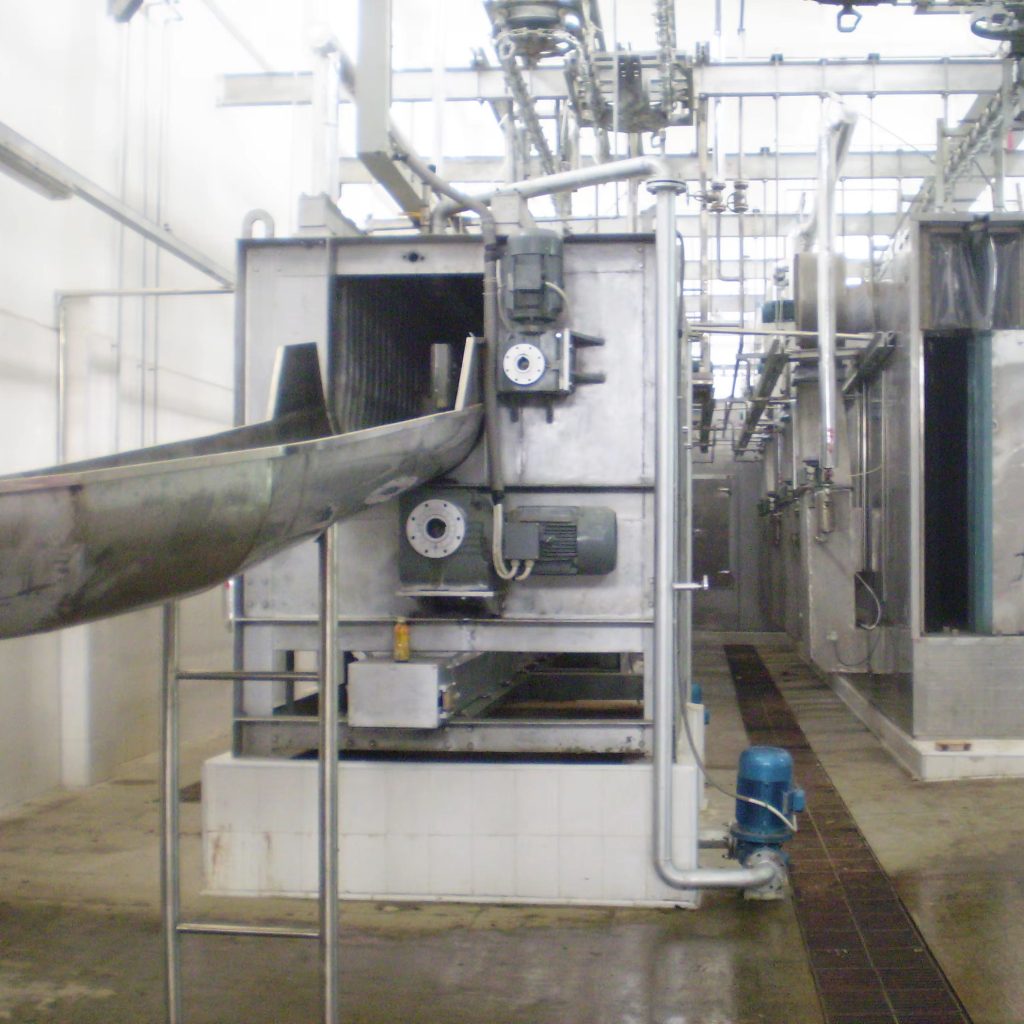
Two-Stage Scald & Dehair
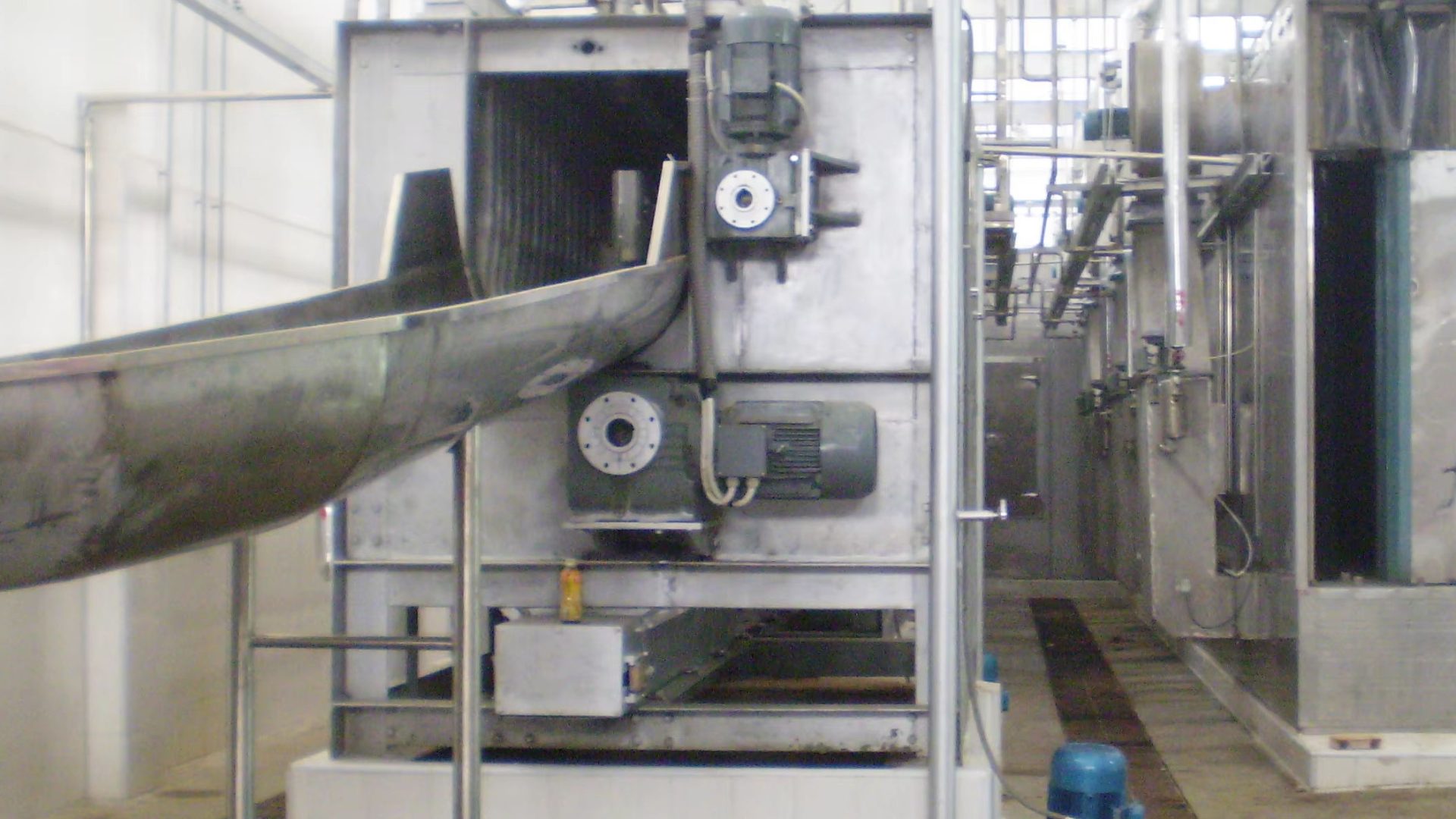
The two-stage spiral machine scalds and dehairs without rehanging, with the hair carried away on its own conveyor.
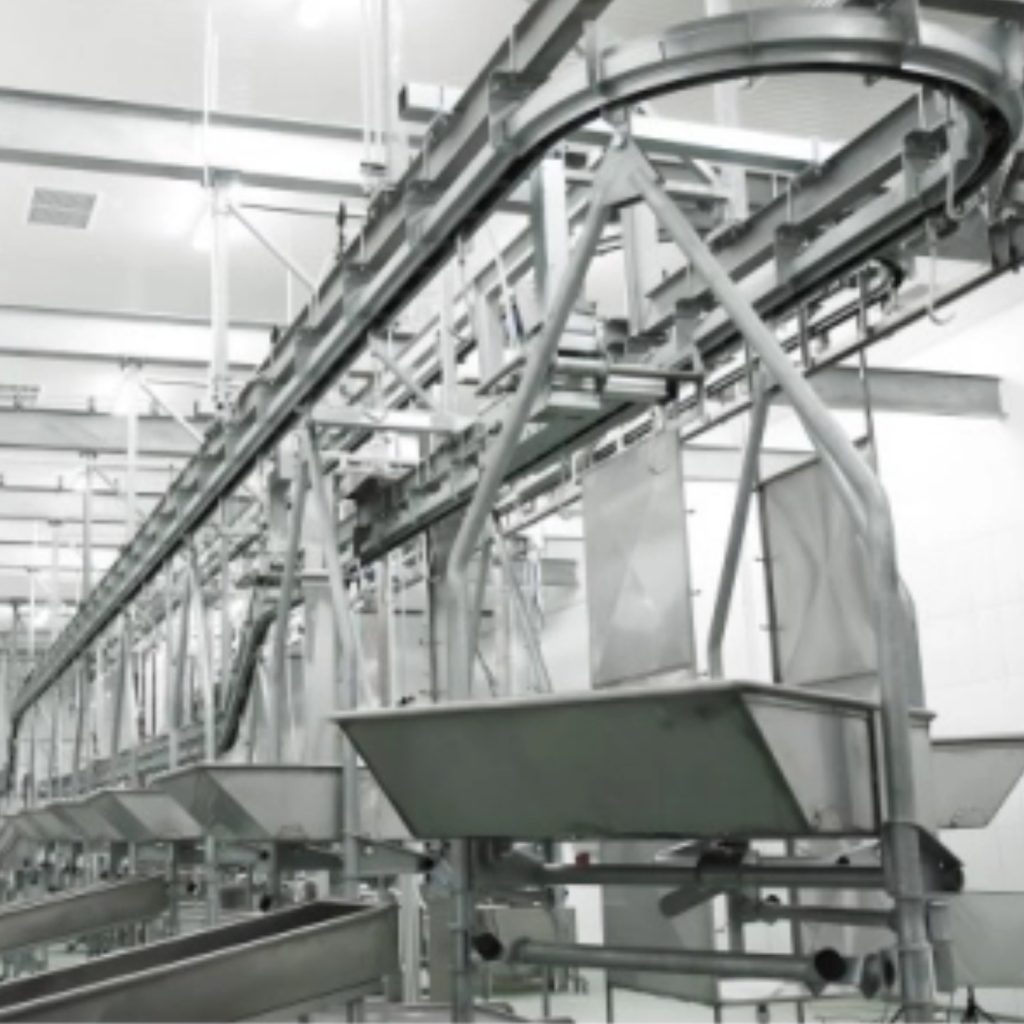
Synchronous Offal Inspection
Red and white offal travel in sync with the carcass on flipping, auto-cleaning trays for the veterinary read.
Robotic Carcass Splitting
The robotic splitter runs a vertical spine cut with wash-down between carcasses, in manual or automatic mode.
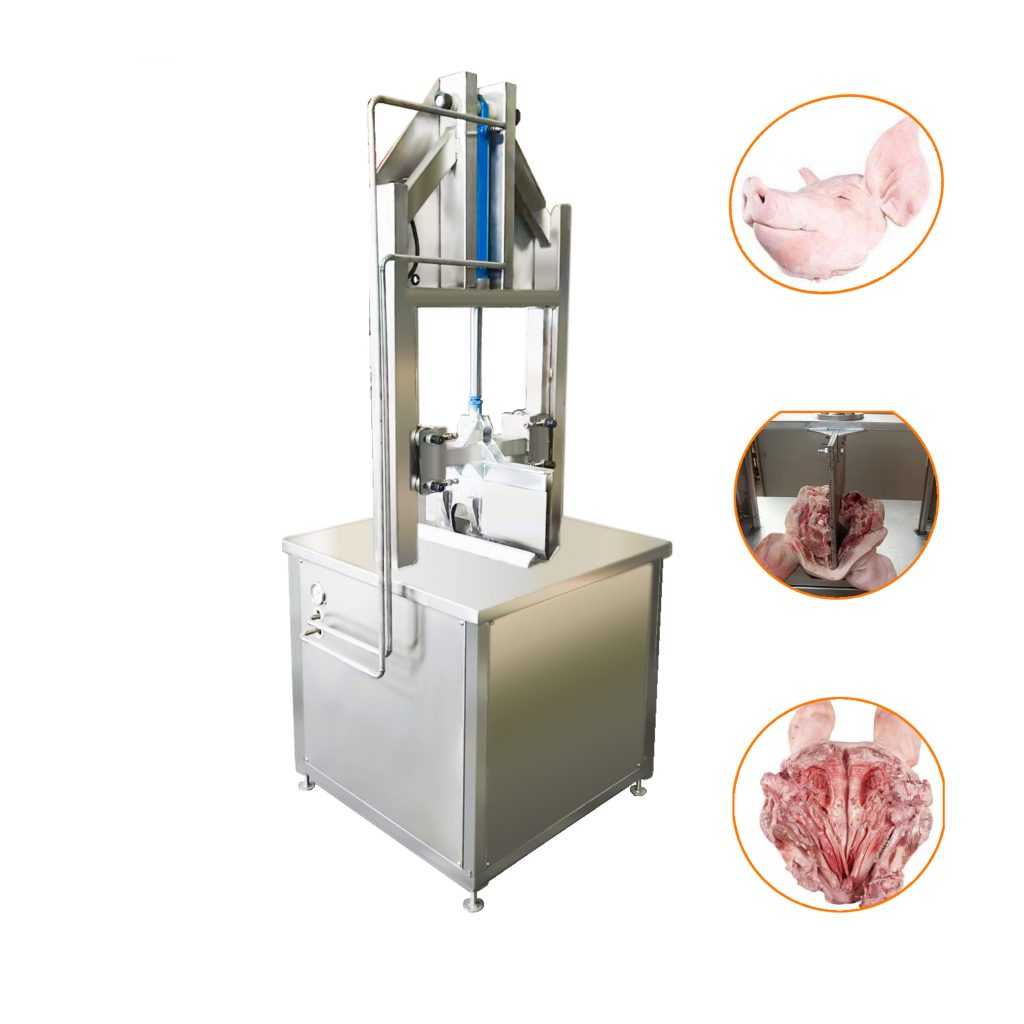
Head Splitting Room
Heads are split and dehaired in their own room so the brain and tongue stay saleable.
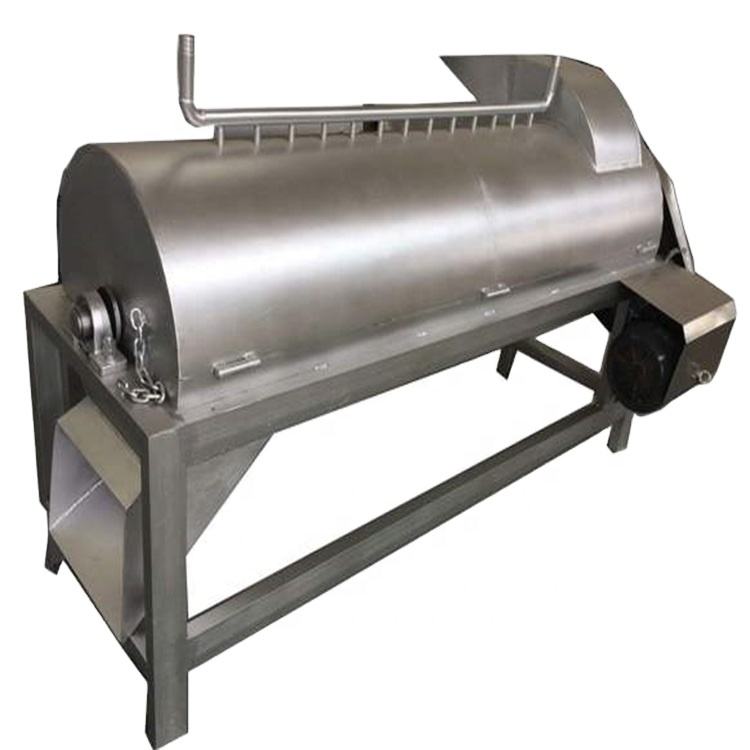
Trotter Processing Cell
Trotters are split, dehaired, washed and singeing on a dedicated line off the dirty side.
Why Buy A Line From An Equipment Manufacturer
We make the machines, so we set the specification — and we remain responsible for what the line actually delivers.
Single accountability
One engineer owns the line specification, layout, utility list, container plan and spare-part schedule — not six suppliers pointing at each other.
Stations sized to your pig
Scald curve, beater count, singeing gas, split rate and chill duty are recalculated for your carcass weight and head rate, not copied from a catalogue line.
Containerised for remote sites
Single-track lines ship in two to four 40HQ containers and install with local labour and a phone call, which is why they suit rural and island plants.
Wear parts on the same order
Rubber dehairing beaters, scraper paddles, brushes, saw blades, hooks and chains ship with the line, so you do not stop in week three waiting for consumables.
Layout before construction
We send marked-up drawings, floor loads, drain positions and utility routing so the building is poured around the line, not the other way round.
Operator training included
Commissioning covers line speed setting, scald temperature control, evisceration hygiene, blade sharpening routines and the daily CIP cycle.
Paperwork That Survives The Inspection
Certificates, material declarations and test records supplied with each shipment for customs clearance and retail audits.
What We Need To Size Your Line
Send these six items and a named NPW engineer returns a station list, layout sketch, utility schedule and quotation within 24 business hours.
- Daily volume — pigs per day and shifts per day
- Carcass weight — average warm carcass and range in kilograms
- End product — whole carcass, halves, primal cuts, or offal and trotters recovered
- Site — building size, ceiling height, floor load and rail level
- Utilities — power supply, water source and boiler fuel available
- Regulation — veterinary inspection rules and export or retail standards to meet
FAQ
A single-track line moves carcasses on one rail with a combined spiral scalding and dehairing machine as the core, and sticking, evisceration and splitting stay manual — it is built for 50 to 200 head a day and commissions in weeks. An automated line separates every station on enclosed track: continuous bleeding conveyor, two-stage spiral scald and dehair, breast-removal conveyor, synchronous offal inspection, robotic splitting and a division conveyor to the cut-up hall, which is what carries 300 to 500 head a day across two or three shifts. Above roughly 200 head a day the single track cannot keep the sticking team and the dehairer in balance, so we move you to the automated format.
Not on the same stations. A pig carcass is scalded and dehaired, a cattle or sheep carcass is skinned — the two processes share almost no equipment after stunning. What plants commonly do is share the building: one lairage, one utilities block and one chill store, with a pig line on one side and a cattle or sheep line on the other. We have delivered combined plants this way and will draw the zoning so the two lines never cross.
It depends on the scald method and how much is recirculated. As a budgeting figure, a single-track line works on roughly 0.3–0.5 m³ of water and 15–25 kg of steam per head, while an automated line with a filtered, recirculated scald bath, a demand-controlled wash and heat recovery sits meaningfully lower per head despite the higher rate. We issue the exact boiler output, chiller duty, water and effluent figures with the quotation, calculated from your head rate — those numbers are what your civil contractor needs, not a catalogue average.
For most plants the two-stage spiral machine is the right answer: the carcass enters the scald section and passes straight into the dehairing section without rehanging, which protects the skin, keeps the scald curve tight and gets a 98%+ dehairing rate at up to 750 head an hour on our two-stage unit. A separate scalding tank suits very small or very specialised operations — whole intact-skin products, ritual requirements, or lines under about 50 head an hour. Tell us your product mix and we will spec the right combination.
The rule is separation with traceability: red offal and white offal travel on their own carriers, in synchrony with the carcass, past a dedicated inspection station with wash-down, and every set stays identifiable to its carcass until the inspector releases it. Our viscera synchronous inspection conveyor carries the pluck and the digestive tract on flipping, auto-cleaning trays so the inspector sees every set in sequence without cross-contact — and the same conveyor layout is what export audits check first.
Yes. We spec and supply the stunning station with the line — electric stunning for single-track plants, and box or CO₂ systems sized to the head rate for automated lines — together with the gating and drive pens that feed it. The welfare rules that apply in your market determine the method, so we ask for them at specification stage rather than after the layout is drawn.
Yes — our engineers have installed lines across Southeast Asia, the Middle East, Africa and Central Asia. A single-track line is commissioned with one engineer plus your local labour in two to four weeks; an automated line runs four to ten weeks with two engineers. Where a site visit is difficult, we run the commissioning on live video with your team, and every machine ships with a factory test video, wiring diagrams and an English manual. Spare parts and consumables are shipped with the line so the first three months never wait on freight.
A single-track line typically leaves the factory 30–45 days after the deposit and drawings are confirmed, and an automated line 60–90 days depending on the station count. The layout drawings, utility schedule and foundation plan come in the first two weeks so your civil works run in parallel with fabrication. Ocean freight adds the usual three to six weeks depending on destination, and we load and photograph every container at our works before it seals.
The by-product rooms are sized to the same head rate as the main line, because a bottleneck there backs up the kill floor. As reference points: the head splitting machine handles up to 500 heads per hour, the trotter hair removal machine processes 1–2 tonnes of trotters per hour, the shell remover around 200 trotters per hour, and the intestine washer cleans a casing piece in roughly 50 seconds. We balance the by-product stations against your head rate and product plan — some plants run them on the second shift instead.
A station-by-station equipment list with models and quantities, the layout drawing, the utility schedule (power, water, steam, compressed air, drainage), the container loading plan, the price EXW or CIF, the lead time per batch, and the wear-parts kit for the first six months. Everything factory direct — you are quoting with the manufacturer, not a trading desk, which is also why the wear parts stay available years later.
Get Your Pig Line Specification
Tell us your capacity, carcass weight and site conditions — an NPW engineer returns a station list, layout sketch, utility schedule and quotation within 24 hours.
Tell Us About Your Line
- Daily volume: 50 / 100 / 200 / 300 / 500 head per day
- Carcass weight: average warm carcass and range in kilograms
- End product: whole carcass, halves, primal cuts, offal and trotters recovered
- Site: building dimensions, ceiling height, floor load, country
- Utilities: power supply, water source, boiler fuel available
- Inspection: veterinary and export standards the plant must satisfy
- Timeline: target commissioning date and budget range
Talk To Your Engineer
Every NPW solution is handled end to end by one named engineer — capacity sizing, layout drawings, configuration lists and shipping schedules. Reach out directly and you will speak to the person responsible for your line, not a call centre.