Why the Hanging-to-Evisceration Flow Defines Poultry Plant Profitability
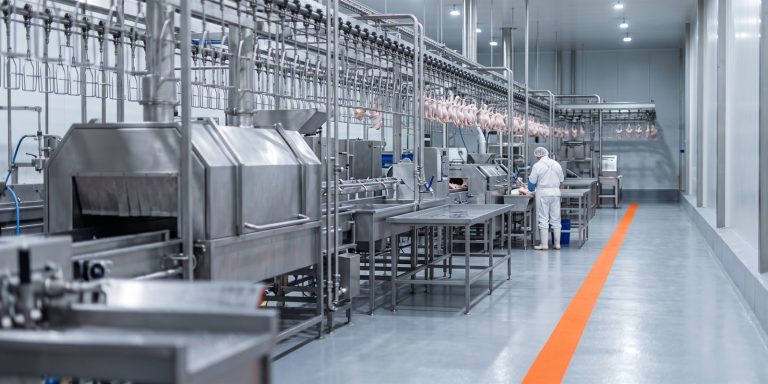
In a modern poultry slaughterhouse, yield, food safety and uptime are all decided between two points: the moment a live bird is hung on the overhead conveyor and the moment a fully eviscerated, inspected carcass leaves the line. NPW integrated poultry slaughter lines are engineered so that every bird travels that journey at synchronized speed, under precise temperature control, and on food-grade stainless steel at every contact point.
Stage 1: Live Bird Hanging and Stunning
Operators hang birds by the hocks onto a variable-speed overhead conveyor. Cycle rate is matched to the stunning and bleeding capacity downstream, so birds are never held too long before processing. A water-bath stunner with adjustable voltage and frequency keeps birds calm, delivers a humane and consistent stun, and promotes complete bleeding while protecting wing and leg integrity for later grading.
Stage 2: Bleeding and Blood Recovery
An automatic killing station followed by a 90–120 second bleed tunnel gives sufficient time for full exsanguination, which directly improves carcass colour and shelf life. Blood is captured in a dedicated collection trough and drained hygienically, keeping the processing floor dry, safe and easy to clean.
Stage 3: Scalding and Plucking — Where Temperature Wins
Scalding is the single most sensitive step in the whole line. NPW scalders maintain a tightly controlled range — typically 58–62°C for broilers with a defined dwell time — using even agitation and accurate temperature feedback. Feathers release cleanly without cooking the skin, which protects the carcass during plucking.
Downstream multi-drum pluckers with correctly tensioned rubber fingers remove feathers gently and efficiently. The result on the line is measurable:
- Feather removal rates consistently above 98% with minimal manual rework
- Reduced skin tearing, broken wings and downgraded carcasses
- Lower hot-water and energy consumption per bird
- Fewer operators required for post-plucking inspection and touch-up
Stage 4: Evisceration, Inspection and Pre-Chilling
Automatic eviscerators open the abdomen, extract the viscera and transfer giblets for separate washing and chilling. Neck breaking, lung removal and a high-pressure spray wash prepare the carcass for veterinary inspection under good lighting. Approved carcasses then pass into the pre-chiller, where counter-flow cold water brings core temperature below 4°C within the required time window — the last food-safety barrier before portioning, packing and shipping.
Every second of synchronization between hanging, stunning, scalding and evisceration is worth real money: it converts to higher yield, fewer downgrades and lower labour cost per bird.
Built for the Reality of Daily Production
NPW builds these lines in 304 food-grade stainless steel with quick-release components, smooth welded joints and open frames that make cleaning, sanitation and maintenance fast. Modular configurations let a plant start at low capacity and expand step by step as demand grows.
To review the full hanging-to-evisceration workflow for your capacity, species and layout, contact the NPW engineering team at npwplastic.com and request a tailored line proposal.
Solutions related to this article
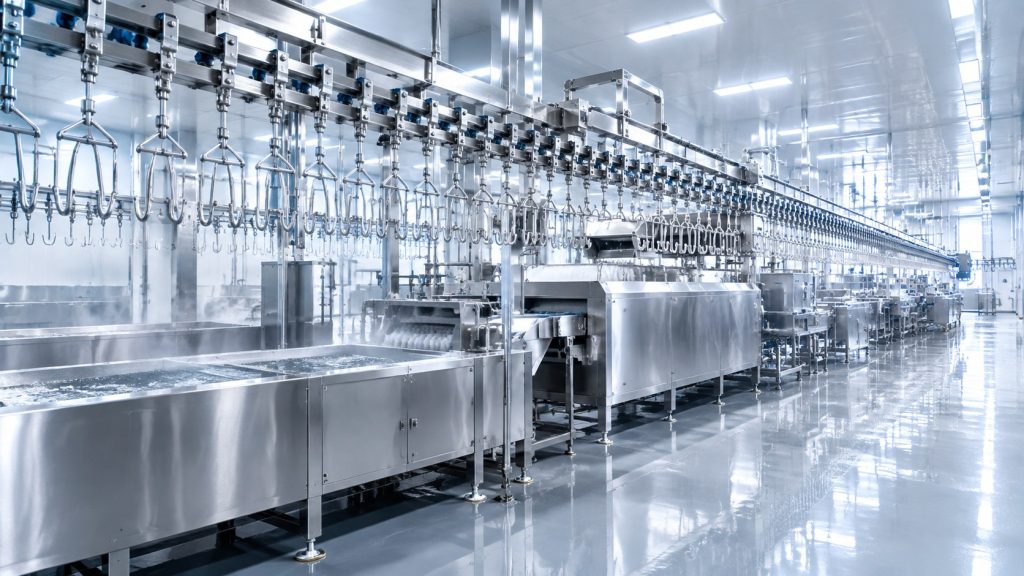 PoultryComplete Poultry Slaughter Line SolutionsHanging, scalding, plucking, evisceration and chilling on one continuous line.View solution →
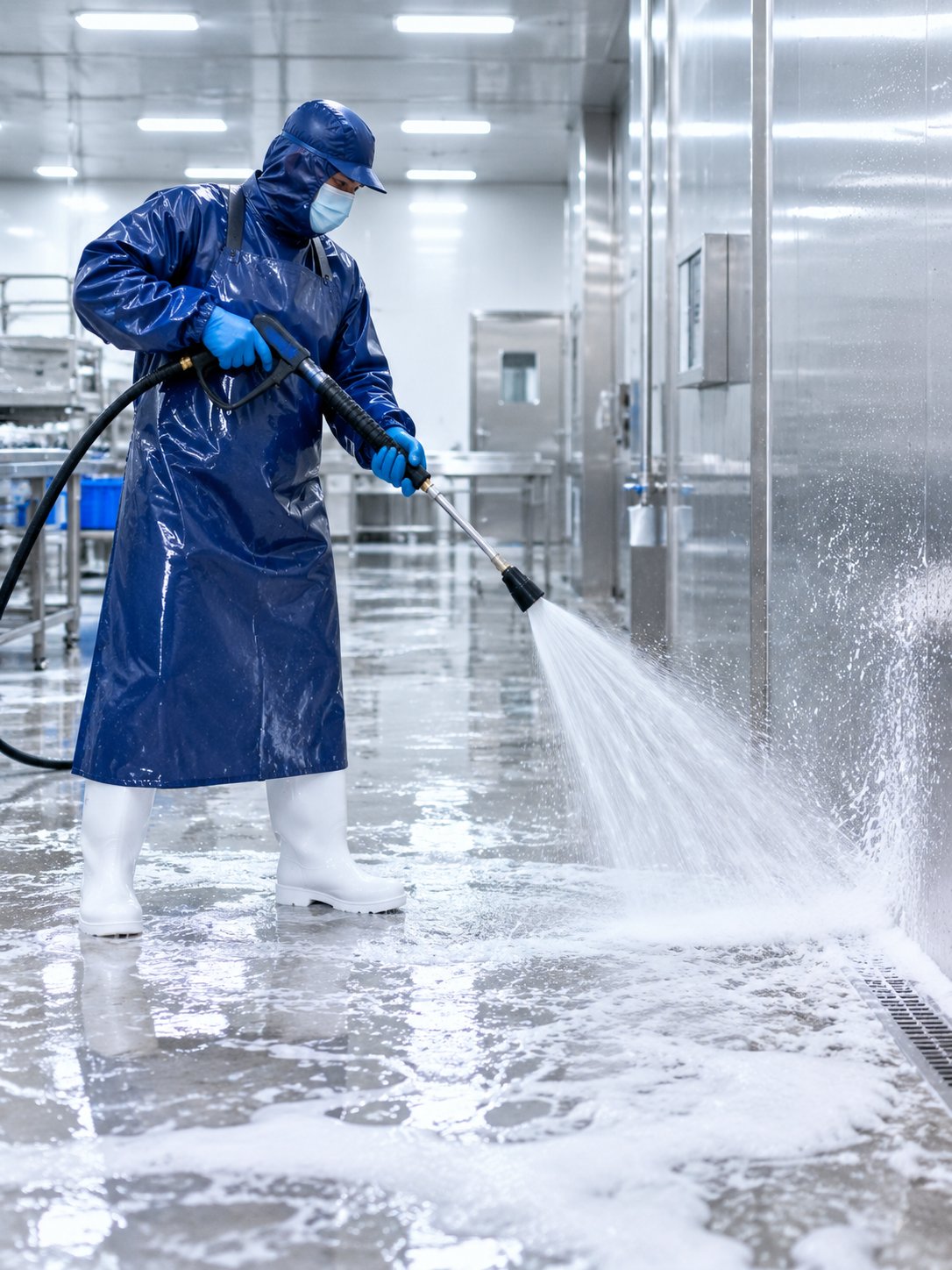 CleaningFood Industry Cleaning Equipment SolutionsFoam, CIP and washdown systems for food-contact surfaces and drains.View solution →
 IceIce Making Equipment SolutionFlake and tube ice for pre-chilling, chilling tanks and cold chain.View solution →