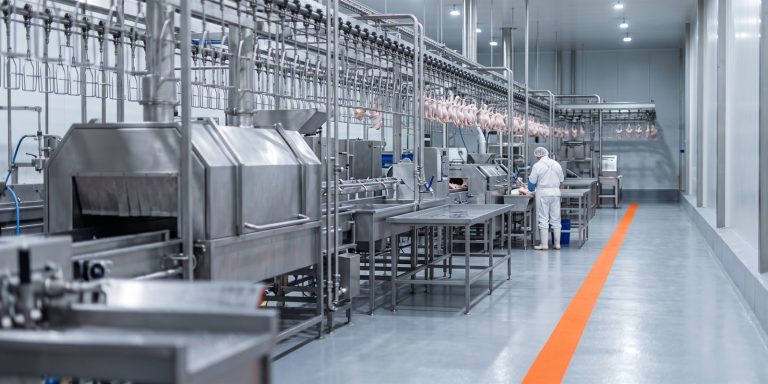
A poultry slaughter line is only as strong as its first three stations. In our latest project video, NPW walks through the complete workflow of electric stunning, bleeding and scalding — three tightly linked stages that decide bleed-out efficiency, carcass appearance, and how well the downstream plucker performs.
Stage One — Electric Stunning (Corona)
Stunning is the controlled application of a low-voltage, high-frequency current to render birds unconscious before slaughter. It protects animal welfare, reduces wing flapping and broken bones, and relaxes the neck muscles so bleeding can begin immediately and completely.
- Water-bath stunner with adjustable voltage and frequency
- Constant-current control to avoid over-stunning and carcass damage
- Stainless steel entry and exit ramps for smooth shackle flow
- Insulated cabinet with emergency stop and safety interlock
Stage Two — Bleeding
After stunning, birds pass through the bleeding tunnel where a precise cut is made to the jugular vein. A correctly sized tunnel gives each carcass 90 to 150 seconds of uninterrupted bleed time — long enough for a complete bleed-out, short enough to keep line speed high.
- Overhead rail tunnel with drip trays and blood collection trough
- Fully welded SS304 body — no crevices, fast wash-down
- Complete bleed-out means whiter skin, fewer blood spots, better grading
Stage Three — Scalding
Scalding decides plucking quality. Water temperature, immersion time and agitation must be matched to bird size, age and feather density. Typical poultry scald runs at 58–62°C for 60–120 seconds, while waterfowl require a harder scald at a higher temperature.
- Thermostatic steam injection with tight temperature accuracy
- Counter-flow water replacement to keep the tank clean and stable
- Gentle agitation or air-jet turbulence for uniform heat transfer
- Digital display and PLC setpoints for repeatable, documented recipes
Even a one-degree deviation changes the result: too cool and the feathers will not release; too hot and the skin tears, causing downgrades and lost yield.
Consistent stunning, a complete bleed-out and precise scalding are not three separate jobs — they are one single quality decision.
Engineered as One Continuous System
NPW designs stunning, bleeding and scalding as a synchronized line rather than isolated machines. Capacity ranges from a few hundred to more than ten thousand birds per hour, with food-grade SS304 contact surfaces, sanitary welds, rounded corners and quick-release components for fast sanitation. One PLC and HMI interface manages line speed, water temperature, agitation and alarms, so operators can repeat a proven recipe shift after shift.
Shipping, Installation and Support
Every unit is functionally tested, inspected, wrapped and crated for sea freight, with full documentation included. NPW supplies layout drawings, remote commissioning guidance, operator training materials and long-term spare parts to keep your line running.
Contact NPW today to plan your poultry slaughter line — from stunning to scalding and every stage that follows.
Solutions related to this article
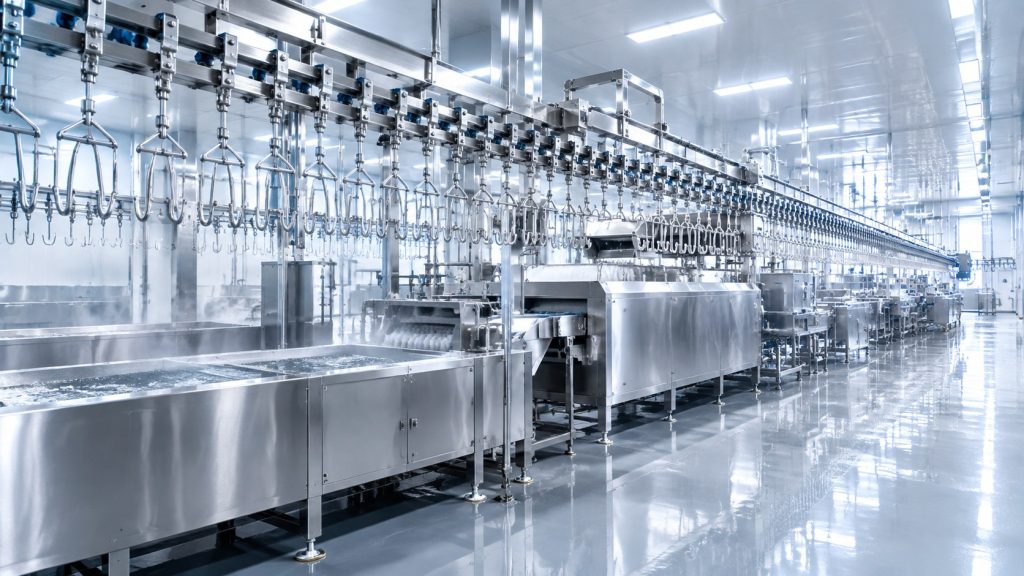 PoultryComplete Poultry Slaughter Line SolutionsHanging, scalding, plucking, evisceration and chilling on one continuous line.View solution →
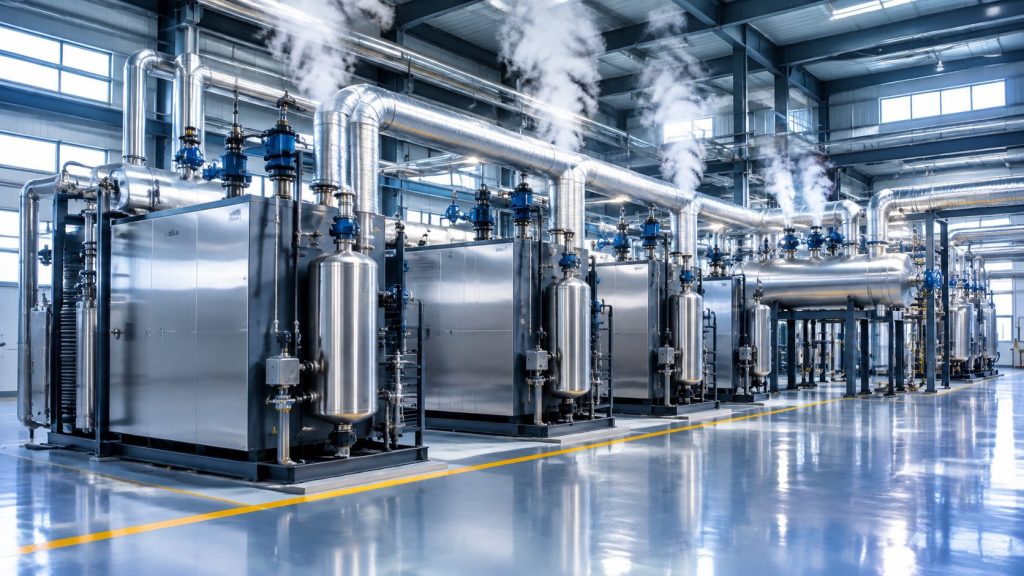 Steam & HeatingSteam Boiler & Heating System SolutionSteam and hot water for scalding, cleaning, cooking and plant heating.View solution →
 Cattle & SheepCattle & Sheep Slaughter Equipment SolutionsStunning, hoisting, hide removal and dressing for cattle, sheep and goat lines.View solution →