
Stage 1: Preparation and Stunning: Building the Foundation for Animal Welfare and Meat Quality
In modern poultry slaughter processes, preparation and stunning constitute a critical initial phase that integrates humane treatment with quality assurance. This stage focuses on minimizing bird stress through scientific and gentle handling, thereby establishing the foundation for subsequent efficient and hygienic slaughter operations. It consists of three sequential steps: receiving and resting, hanging, and stunning.
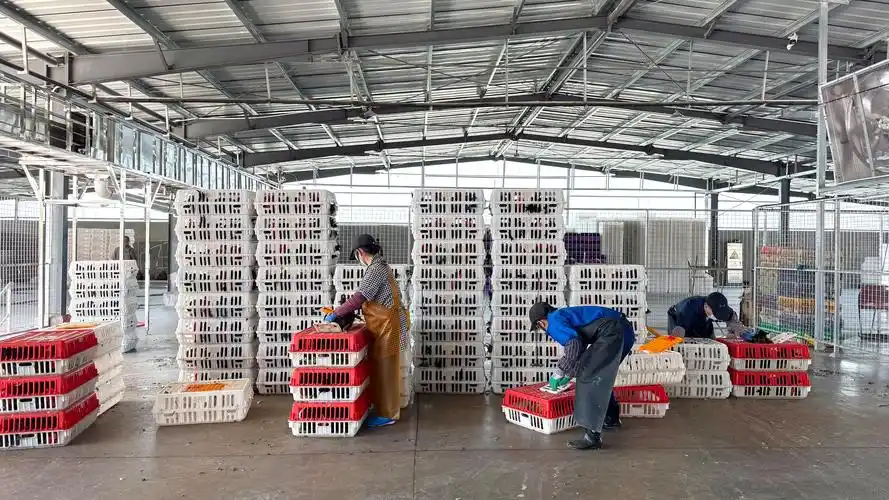
1. Receiving and Resting
The process begins with the arrival of live poultry transport vehicles at the processing plant. Birds are unloaded gently and transferred to a specifically designed resting area. This environment is carefully controlled to be quiet, with subdued lighting, and equipped with ample clean drinking water.
The primary objective of this step is to allow birds to recover from the stress of transportation. The journey inevitably induces physiological and psychological stress, leading to accelerated glycogen depletion and the production of stress-related metabolites. Through resting, birds can alleviate stress and regain physiological equilibrium. This not only meets basic animal welfare requirements but also holds significant technical value: calm birds experience more thorough bleeding in subsequent steps, which helps reduce carcass bruising, improves meat color, extends shelf life, and prevents quality defects such as pale or dark meat caused by stress.
The key control points involve ensuring adequate resting time (typically 1 to 3 hours, adjusted for breed, transport duration, and environmental conditions) and avoiding overcrowding in pens. Sufficient space must be provided to prevent injuries and additional stress from trampling or crushing.
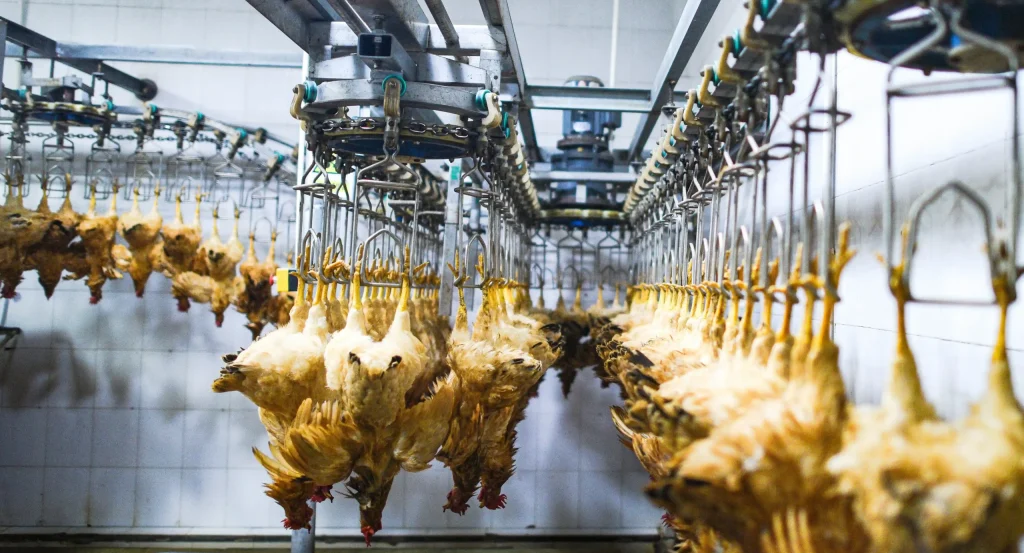
2. Hanging
After resting, birds proceed to the hanging stage. Operators or automated hanging systems gently suspend the birds by their feet onto moving shackles of a conveyor line. Automated systems further enhance efficiency and consistency while minimizing human operational variability.
The main purpose of this step is to smoothly integrate birds into the highly automated slaughter line. Stable and properly oriented hanging is crucial for the precision of subsequent stunning, slaughtering, and processing steps. The most critical operational requirement here is “gentleness.” Any rough handling can cause panic and struggling in birds, contravening animal welfare principles and potentially leading to physical injuries such as wing fractures or joint dislocations, which directly compromise carcass integrity and commercial value.
3. Stunning
Stunning is the core of this stage and the entire humane slaughter process. It is defined as the use of physical or chemical methods to immediately render birds unconscious and insensible to pain before slaughter, ensuring they do not experience suffering during subsequent procedures.
Two mainstream stunning methods are currently in use:
- Electrical Water Bath Stunning: This is the most widely applied stunning method globally. As suspended birds move along the conveyor line, their heads are automatically immersed in an electrified saline water bath. The current instantly passes through the brain, inducing immediate unconsciousness. This method is efficient and economical but requires precise control of voltage, frequency, and duration to achieve optimal stunning—ensuring effective unconsciousness without causing cardiac arrest (to facilitate bleeding) or severe physical damage (e.g., hemorrhages).
- Controlled Atmosphere Stunning (CAS): Birds are processed in groups through a chamber filled with high concentrations of carbon dioxide (CO2) or a mixture of CO2 and inert gases (such as argon or nitrogen). Birds gradually lose consciousness in a stress-free state after inhaling the gas. This method is considered to significantly reduce fear and anxiety in birds and is regarded as a more humane option, particularly for larger poultry (e.g., turkeys) that may be more sensitive to electrical stunning. However, it involves higher equipment investment and operational costs, making it more common in high-end poultry production or specific processing lines.
The fundamental purposes of stunning are threefold:
First and foremost, to uphold humaneness, ensuring a painless slaughter process in strict compliance with increasingly stringent animal welfare regulations and consumer ethical expectations worldwide.
Second, to ensure operational safety and production efficiency, as unconscious birds do not struggle, facilitating precise mechanized operations.
Third, to safeguard meat quality, significantly reducing muscle damage, bruising, and fractures caused by intense struggling, thereby yielding higher-quality meat products.
In summary, the preparation and stunning stage represents a systematic integration of animal welfare ethics, food-safe production practices, and meat quality management. By implementing standardized procedures—receiving and resting, gentle hanging, and effective stunning—the modern poultry processing industry demonstrates its respect for the dignity of life while laying a solid foundation for delivering safe, premium, and reliable poultry products to the market. Strict control at this stage serves as a key indicator of a slaughterhouse’s technical expertise, management capabilities, and social responsibility.
