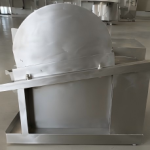
Poultry Back & Breast Opener
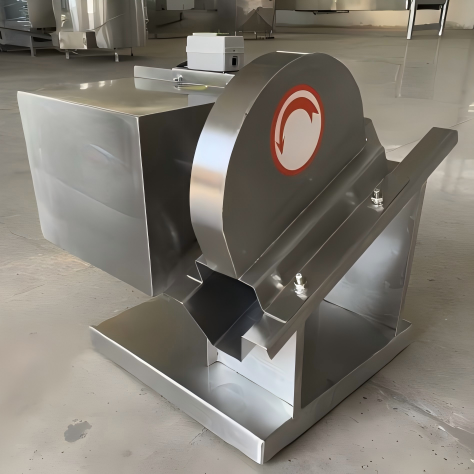
A highly efficient, specialized machine designed for the quick breast-opening and back-splitting of poultry. Built with premium-grade stainless steel, a robust 1.1kW motor, and a high-precision rotary blade, this 40kg machine ensures consistent cuts, exceptional safety, and quick washdowns for food processing facilities.
Contact Us for Pricing
Interested in this product? Contact us now for detailed pricing and product information.
Product Details
I. Product Overview
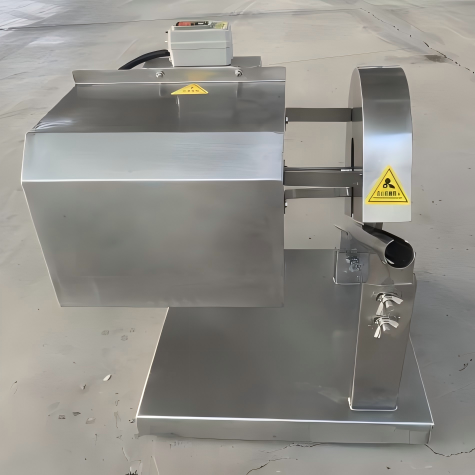
The Poultry Back & Breast Opener is a highly specialized further processing machine engineered specifically for fast, clean, and safe breast-opening (venting) and back-splitting of poultry such as chicken, duck, goose, and quail.
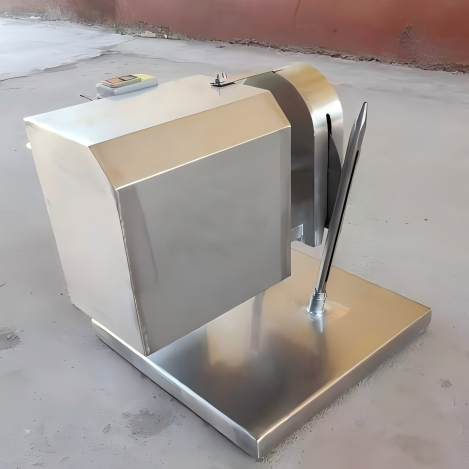
Constructed entirely of high-grade food-safe stainless steel, this robust 40kg machine features a unique vertical guide shaft mechanism that ensures perfectly aligned, uniform cuts every time. It is an essential processing tool for poultry slaughterhouses, wholesale meat markets, and commercial kitchens aiming to maximize production throughput while adhering to strict food hygiene and operator safety standards.
II. Structural Features & Working Principle
1. Key Structural Features
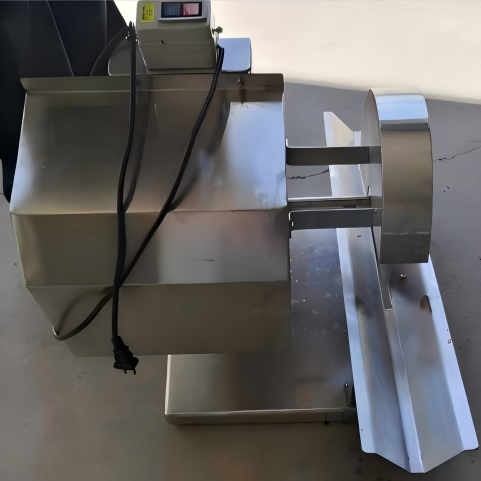
- Vertical Shaft Guide System: Equipped with a precision vertical guide shaft that securely aligns and stabilizes poultry carcasses during feeding for straight, centered cuts.
- High-Rigidity Circular Blade: Features an oversized, wear-resistant circular alloy blade designed to split breastbone and back cartilage cleanly without tearing muscle fibers.
- Hygienic Construction: Fully built from premium food-grade stainless steel with smooth, seamless surfaces that prevent meat residue buildup.
- Enclosed High-Power Motor: Driven by a robust 1.1kW motor with a fully sealed enclosure, preventing water ingress during washdowns and ensuring stable, continuous operation.
2. Working Principle
Upon powering on the machine, the motor drives the circular alloy blade to rotate at high speeds. The operator places the poultry carcass (chicken, duck, goose) onto the vertical guide shaft, aligning the breast or back with the guide line. As the carcass is guided smoothly forward, the high-speed rotating blade instantly slices through the breastbone or spine, producing perfectly opened halves with minimal effort and no bone fragments.
III. Main Technical Parameters
| Parameter | Specification |
|---|---|
| Model / ID | Poultry Back & Breast Opener (Model 10) |
| Function | Poultry Back/Breast Opening & Splitting (Chicken, Duck, Goose) |
| Structural Material | Premium Food-grade Stainless Steel |
| Rated Voltage | 220V / 380V (Dual-voltage options) |
| Motor Power | 1.1 kW |
| Compatible Blade Diameter | Ø200 mm / Ø250 mm (Optional) |
| Machine Net Weight | 40 kg |
| Overall Dimensions (L×W×H) | 400 × 500 × 500 mm |
| Export Wooden Case Size | N/A (Standard export case customizable upon request) |
| Gross Weight (With Case) | N/A |
IV. Installation & Commissioning
1. General Installation Procedure
- Place the cutting machine on a flat, solid, and non-slip workbench to eliminate vibration during operation.
- Ensure the onsite power supply matches the rated voltage (220V single-phase or 380V three-phase).
- Connect the power cable securely. For 380V three-phase configurations, verify that the blade rotates in the correct direction (indicated by the arrow on the safety guard).
- Idle the machine (run empty) for 1–2 minutes to inspect for any abnormal noises or excessive vibrations.
2. After-Sales Service
Installation, commissioning, and regular technical maintenance can be conducted by our company’s professional engineering team or under remote guidance from our customer support center.
V. Safe Use & Precautions
1. Before Use
- Read the operator manual thoroughly to understand the basic structure and safety rules.
- Check if the blade fastening nut is securely tightened.
- Ensure the protective guard is securely in place and has no structural damage.
2. Operational Safety
- Strictly Prohibited: Do not push carcasses towards the blade with bare hands when close to the cutting area. Always maintain a safe distance and slide the carcass smoothly along the vertical guide shaft.
- Do not wear loose clothing, necklaces, or loose gloves that could get caught in the high-speed rotating blade. Long hair must be tied back.
- Always disconnect the power plug before performing cleaning, adjustments, blade replacement, or maintenance.
3. Safety Pictograms
| Symbol / Hazard | Safety Meaning & Precautionary Measures |
|---|---|
| Danger | High-speed rotating blade hazard. Keep hands and fingers strictly away from the blade. |
| Danger | Electrical shock hazard. Disconnect the main power source before opening the electrical enclosure. |
| Warning | Sharp blade edge. Handle with extreme care during maintenance, blade cleaning, and replacement. |
| Warning | Do not operate the machine with safety guards or safety shields removed. |
4. Daily Maintenance
| Frequency | Maintenance Task Description |
|---|---|
| Every Shift | Clean meat residue and fat off the blade and stainless steel housing with warm soapy water. Sanitise after cleaning. |
| Every Week | Inspect the tightness of the blade fastening nut and the motor mounting bolts. |
| Every Month | Inspect the circular blade for dullness or micro-chips; sharpen or replace if necessary. |
| Every 3 Months | Check electrical wiring insulation and ensure the main ground wire is connected securely. |
VI. Simple Troubleshooting
| Problem Encountered | Possible Root Cause | Recommended Solution |
|---|---|---|
| Motor does not start when switched on | 1. Power plug is loose. 2. Internal wiring or capacitor is damaged. |
1. Check and secure the power connection. 2. Contact professional technicians to inspect wiring. |
| Clean cut issues or ragged / crushed meat cuts | 1. Blade is dull or chipped. 2. Blade is installed in the reverse direction. |
1. Sharpen or replace the circular cutting blade. 2. Re-install the blade in the correct rotation direction. |
| Heavy machine vibration or abnormal noise | 1. Blade fastening nut is loose. 2. Blade is deformed or unbalanced. 3. Motor bearings are worn out. |
1. Stop the machine immediately and tighten the blade nut. 2. Replace the deformed or unbalanced blade. 3. Replace the motor bearings. |
| Motor overheats during operation | 1. Overloading (feeding poultry too quickly). 2. Input voltage is unstable or too low. |
1. Reduce the feeding speed; allow the motor to cool down. 2. Inspect and stabilize the input power voltage. |