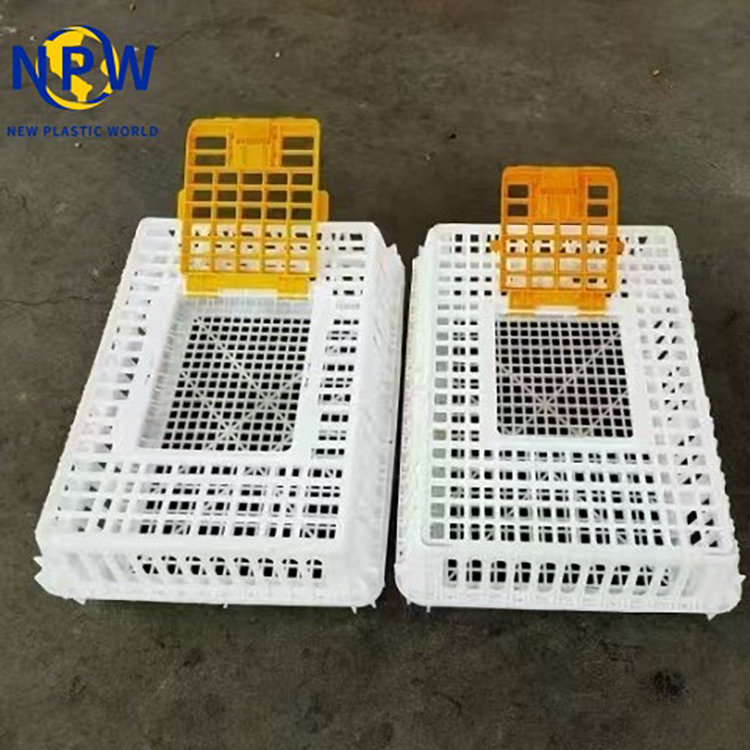
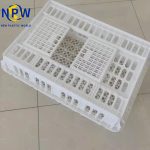
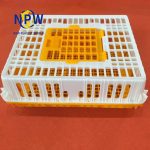
Properly designed chicken transport crates protect the feet of poultry. Small holes in the crates and a smooth bottom avoid clamping and possible injury of poultry. There is also good ventilation. Easy installation. The bottom and top of crates match together so there is no sliding of parts and the birds may be transported safely. Our crates have a longer lifespan than most, up to five years. 100% pure PE material, not a recycled material. Crates feature a thicker middle support and thicker corner compression resistance.
They have big sliding doors on a track design that saves time.
Easy to carry and move.
They save space because they fold.
Specifications of Chicken Crates
Type 1 – made of two pieces
No.
Size
Weight/kg
Door size
Material
Suit for
Quantity chicken
1
750×550×270
4
26*33
Polypropylene plastic
Adult chicken
13
2
750×550×270
4.4
26*33
13
3
750×550×270
4.85
26*33
13
4
750×550×270
5
26*33
13
Type 2-made from six pieces
No.
Size
Weight/kg
Door size
Material
Suit for
Quantity chicken
1
750×550×190
4.75
29×32
Polypropylene plastic
Pigeon, baby chick
13
2
750×550×230
5
29×32
younth chicken
13
3
750×550×270
5.25
29×32
old chicken
13
4
750×550×330
5.75
29×32
Duck, goose chicken
10
5
950×550×250
7
29×32
Duck, goose,chicken
10 or12
Day old chicken transport cages
No.
Size
Weight/kg
Door size
Material
Suit for
Quantity chicken
1
690*495*140mm
1.7
0
PP
baby chick
100
2
690*495*160mm
1.85
0
baby chick
100
Color and Logo could customized, only 200pcs will be OK.
As the poultry industry evolves, so does the need for advanced transport solutions. Adult Poultry Transport Crates have undergone significant innovations to address the challenges of modern logistics. Engineered with precision, these crates blend functionality, durability, and animal welfare considerations to redefine poultry transportation.Modern crates often incorporate modular designs, allowing easy customization for different poultry sizes and species. Adjustable dividers within the crate create separate compartments, reducing overcrowding and minimizing stress during transit. Some models even feature built – in feeding trays and water dispensers, ensuring birds remain hydrated and nourished during long journeys—an innovation that significantly improves post – transport health.Sustainability is a key focus in contemporary crate design. Many manufacturers now use recycled plastics or eco – friendly metals, reducing environmental impact without compromising strength. Nestable designs further enhance efficiency, as empty crates can be stacked to save storage space and lower return – transport costs. This eco – conscious approach aligns with global sustainability goals while meeting the industry’s practical needs. Technology integration is another breakthrough. Smart crates equipped with temperature sensors and GPS tracking enable real – time monitoring of transport conditions. Alerts for sudden temperature changes or route deviations help logistics teams address issues promptly, ensuring optimal bird welfare. Such innovations not only safeguard the poultry but also provide data – driven insights to optimize future transport routes and schedules. For poultry businesses, adopting these advanced transport crates means elevating operational efficiency while prioritizing animal care. The combination of ergonomic handling, hygienic surfaces, and technological features makes them indispensable for any supply chain aiming to balance productivity with ethical practices. In an era where consumer demand for responsible sourcing grows, investing in innovative transport solutions is both a logistical necessity and a brand differentiator.